
*This work presentation focuses on the specific phases of the BRM Project I contributed to, shared in accordance with the non-disclosure agreement. All images, renderings, and illustrations are my original creations (except a few supporting photographs) and are provided courtesy of the BRM Project. They are part of the project’s visual archive and may not be reproduced or distributed without explicit permission.
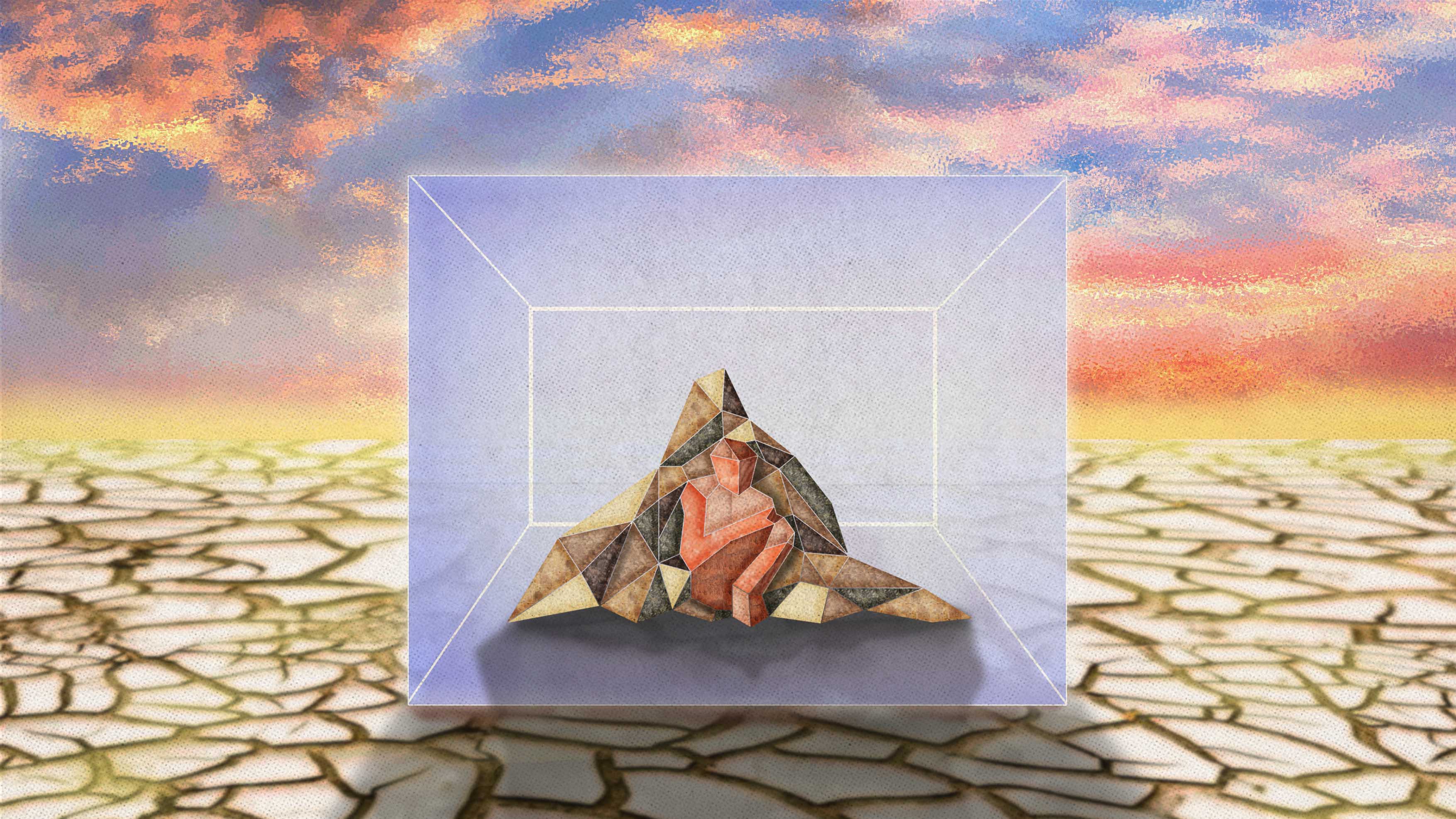
Kanta Kochhar-Lindgren is an Indian-American hard-of-hearing choreographer, director, educator, and Performance Studies scholar. She has developed transdisciplinary and intercultural dance arts practices in Hong Kong, India and the US. The BRM Project 2023 was her collaborative project with Indian artists, designers, and technicians.
The BRM Project 2023, under the aegis of Dr. Kanta Kochhar Lindgren’s Fulbright- Nehru Senior Scholar Research Project (April–December 2023), was a research and intercultural performance initiative that centered on mountains and climate change, particularly in Kerala. This multifaceted project encompassed field-based research, design of stage props and the set pieces, performance development and production, community outreach, films, and publications as well as innovations in accessible theatre practices.
The Body Remembers the Mountain Project 2023, revolved around the close study of Kutiyattam and eco-aesthetics, particularly Kutiyattam’s Kailasodharanam, under the tutelage of Guru Kalamandalam Raman Chakyar. This research informed an intercultural and interdisciplinary performance project called In the Blue Houses Dream the Mountains. It is an experimental performance about the beauty and fragility of our mountains while shedding light on the pressing challenges of climate change. This work was written, directed, and choreographed by Dr. Kanta Ann Kochhar-Lindgren and performed in collaboration with Indian artists from different performing artforms.
The performance is choreographed as an abstract and surrealistic geo-meditation, exploring 'the body and the mountain' through diverse scales, concepts, storytelling techniques, and performance styles. The choreography integrates art forms such as Kutiyattam, Poothan Thira, Kalaripayattu and contemporary dance. This production marks a significant milestone as the first Accessible Theater Production for live theater work in Kerala, featuring interpretation in Indian Sign Language and audio description in Malayalam.
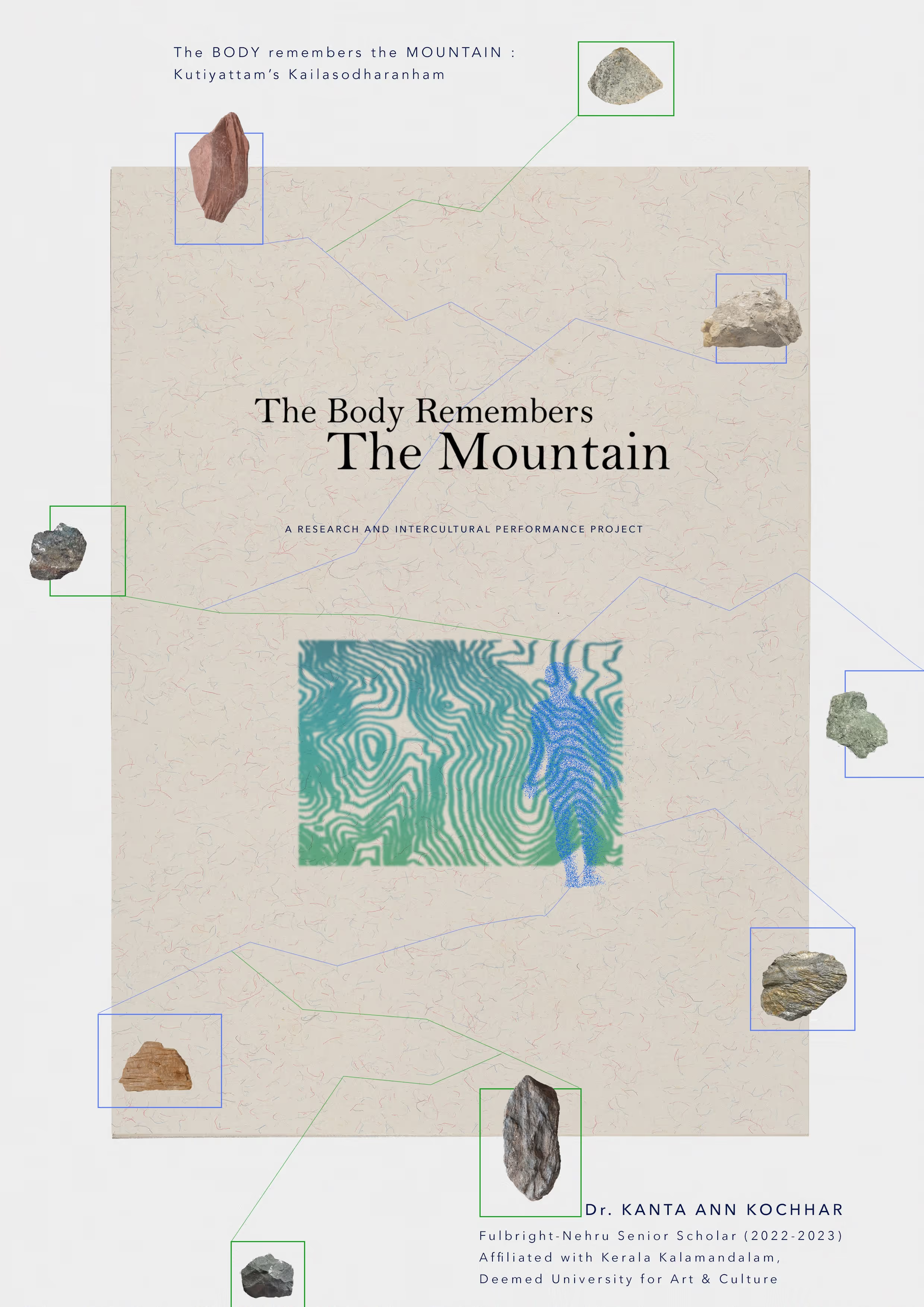
Project keywords:
mountains scenography eco-aesthetics performance art drawing sustainable set design accessible eco-theater climate change.
Working on the BRM project gave opportunity for an insightful delve on several questions —
what is scenography ?
performance as a multisensory platform.
Drawing as a documentative, analytical,
speculative and explorative tool in scenography.
eco-aesthetics and how art preserves ecology ?
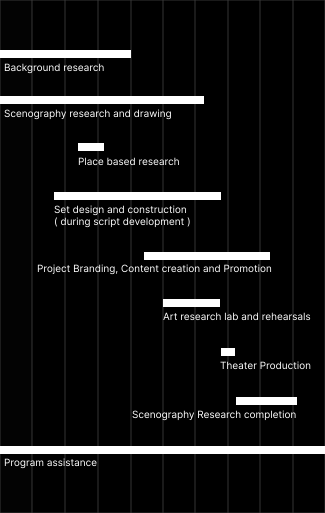
As the first member to join Kanta Kochhar-Lindgren’s team for the BRM Project, I got to engage in its full development process and execution. Joined as a Research and Program assistant in May 2023 and became a multidisciplinary hand to adapt to project’s evolving needs.
Among the various tasks undertaken for the project, design and research were my primary areas of focus. Managing diverse responsibilities gave a curatorial perspective on the overall project, enabling a more holistic approach to each individual task.
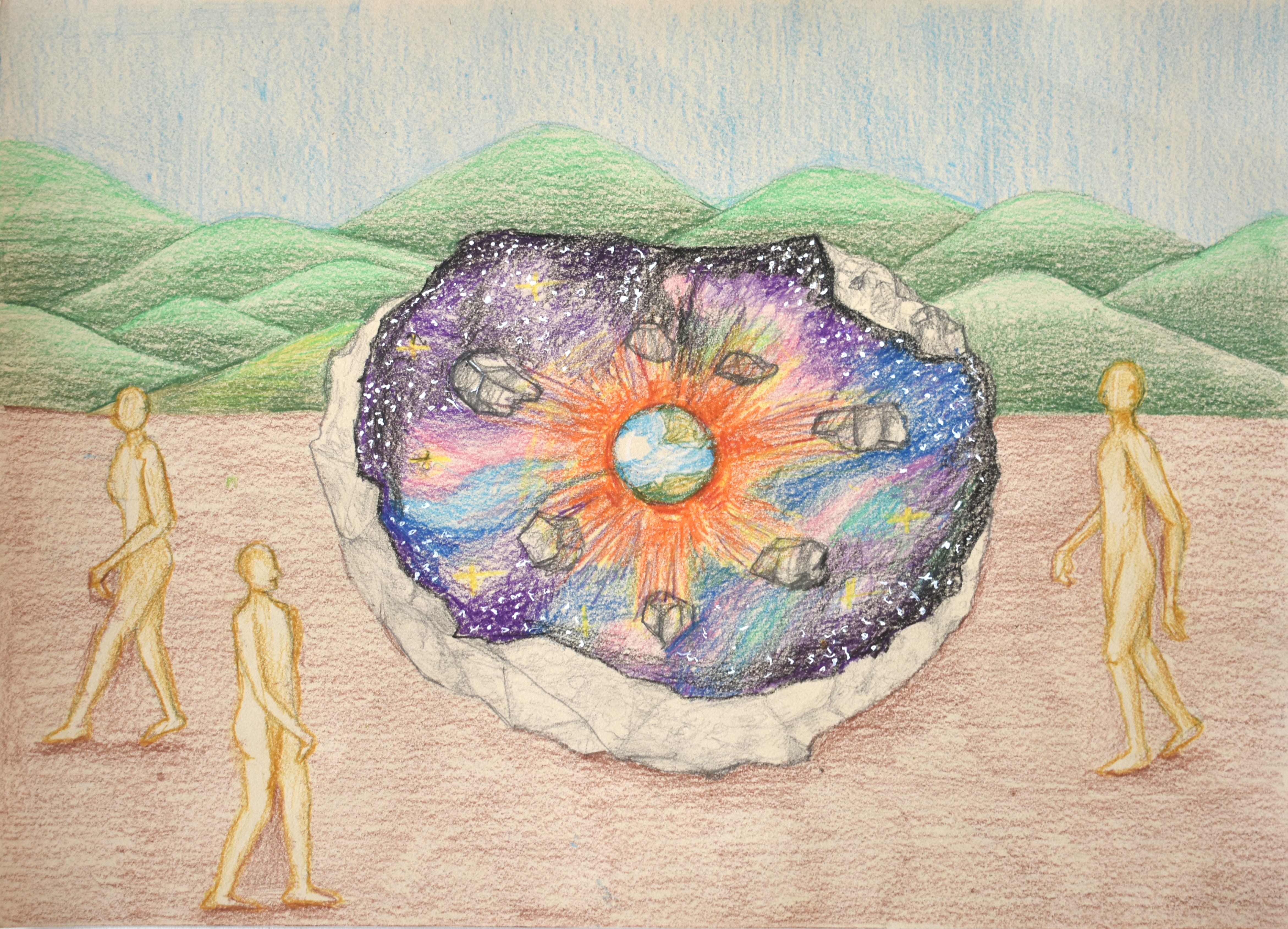
IMAGE CREDITS - ARTIST: POURNAMI CHANDRA, COURTESY OF BRM PROJECT.
What is Scenography?
Scenography is a sensorial and intellectual lens that synthesizes space, object, material, art, research, narrative, emotion, intention and action, which can be used to design experiences, facilitate performances or to understand and form relationships with any environment.
Research assistance was required on the topic of scenography. Coming from an architectural background, I found great interest in exploring the topic since both theater and architecture deal with space, movement and sensoriality.
Precisely the work given was to develop a comparative set of sketches of several performances that were chosen by the director as case studies for her project.
From observing Kanta Kochhar-Lindgren’s practice, engaging in discussions with her on the BRM Project, and through my own explorations on the topic, I find myself resonating with the statement that Louise Ann Wilson quotes in her book, ‘Sites of Transformation’ (2022) _
“What is important is that scenographies are environments that not only determine the context of performative actions, but that inspire us to act." (Lotker and Gough 2013: 3–4)
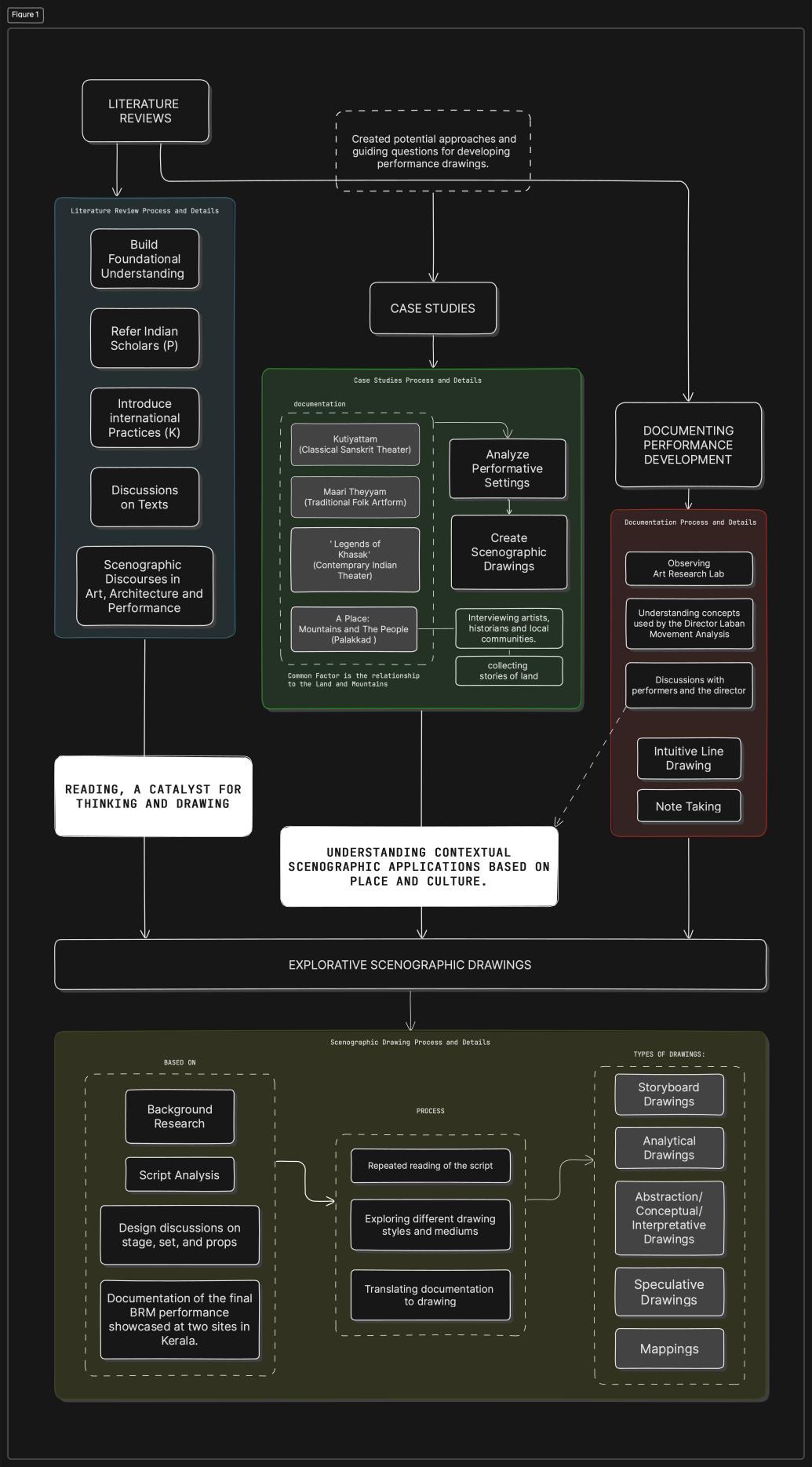
Conducted literature reviews on scenography.
Coordinated and curated field trips to relevant research sites.
Supported interviewing and collaborating with local artists and communities.
Conducted case studies: Drawing and analyzing applied scenography in different types of performances.
Documented the development of BRM performance work through drawing and note-taking during research labs, production design, rehearsals, and theater showcases.
Explored scenographic drawings through diverse drawing techniques, experimenting with various concepts, mediums, and styles.
Supported the drawings with written analysis, reflections and interpretations.
Created nearly 100 drawings, contributing to Kanta Kochhar-Lindgren’s forthcoming publication on scenography, eco-aesthetics, and field research.
Under Kanta Kochhar-Lindgren’s outlining and guidance, the research methodology included literature reviews, performance case study through drawing, place-based studies, spatial observations, analytical and exploratory scenographic drawings, each contributing to a multi-dimensional understanding of the BRM project as well as the field of scenography.
I had the creative liberty to individually explore, interpret and make contributions in all phases of the research.
READING AS A CATALYST FOR THINKING AND DRAWING
Theater practitioner Satybrata Rout talks about the psychological space in theater referring to the activation of the mind over the conjunction of dramatic space and real space. This idea pushed me to explore the mental images that performance or text evokes in one’s mind.

A mental imagery inspired from 'the body and the mountain' & geo-meditation concepts from the director, applied in the performance, 'in the blue houses dream the mouNtains'.
UNDERSTANDING SCENOGRAPHIC APPLICATIONS BASED ON PLACE AND CULTURE.
CASE STUDIES
Indian Scenography: a reflection of Indian Philosophy.
In Indian classical theater, plays were performed in intimate spaces such as the Koothambalam for Kutiyattam. The style of presentation of these artforms is intricate, lyrical, symbolic or abstract with higher aesthetics. As Satyabrata Rout (2022) discusses in his book, Indian scenography is based on the inner truth of the space and not the outer truth. It exists within the performance and is experienced only through it. Therefore Indian classical theater has very few scenic elements on the stage. Scenography is achieved through the art of choreography i.e, natya. The embodiment of the space for the narrative lies within the performer and the desired imagery is created in the psyche of the audience through narrating the verses, mudras (hand gestures), postures and use of the costume, ornaments and makeup.
The intimate, dark and heavily stylized architecture of the Indian playhouse is intended to scale down an individual’s being in the space to a humane scale of intimacy with the self. This brings a strong communication between the actor and spectator. It is similar to the approach in Indian temple architecture with its dark interiors and dense low volumes that are designed for individualistic connection to the deity for each worshipper. The architecture reflects Indian philosophy of the self and spaces are designed to support performative rituals of meditation for the transcendence of the self.

Left: Architectural sketch of Koothambalam —traditional performance venues where Kutiyattam gets conducted.
Right : A drawing from a series of hand drawn recordings of the frame of a Kuttiyatam performance to illustrate the activation of space through time and body. The performers utilize the illuminated area from a single lamp at the center of the stage for the acts.
The Village is the Stage for Maari Theyyam
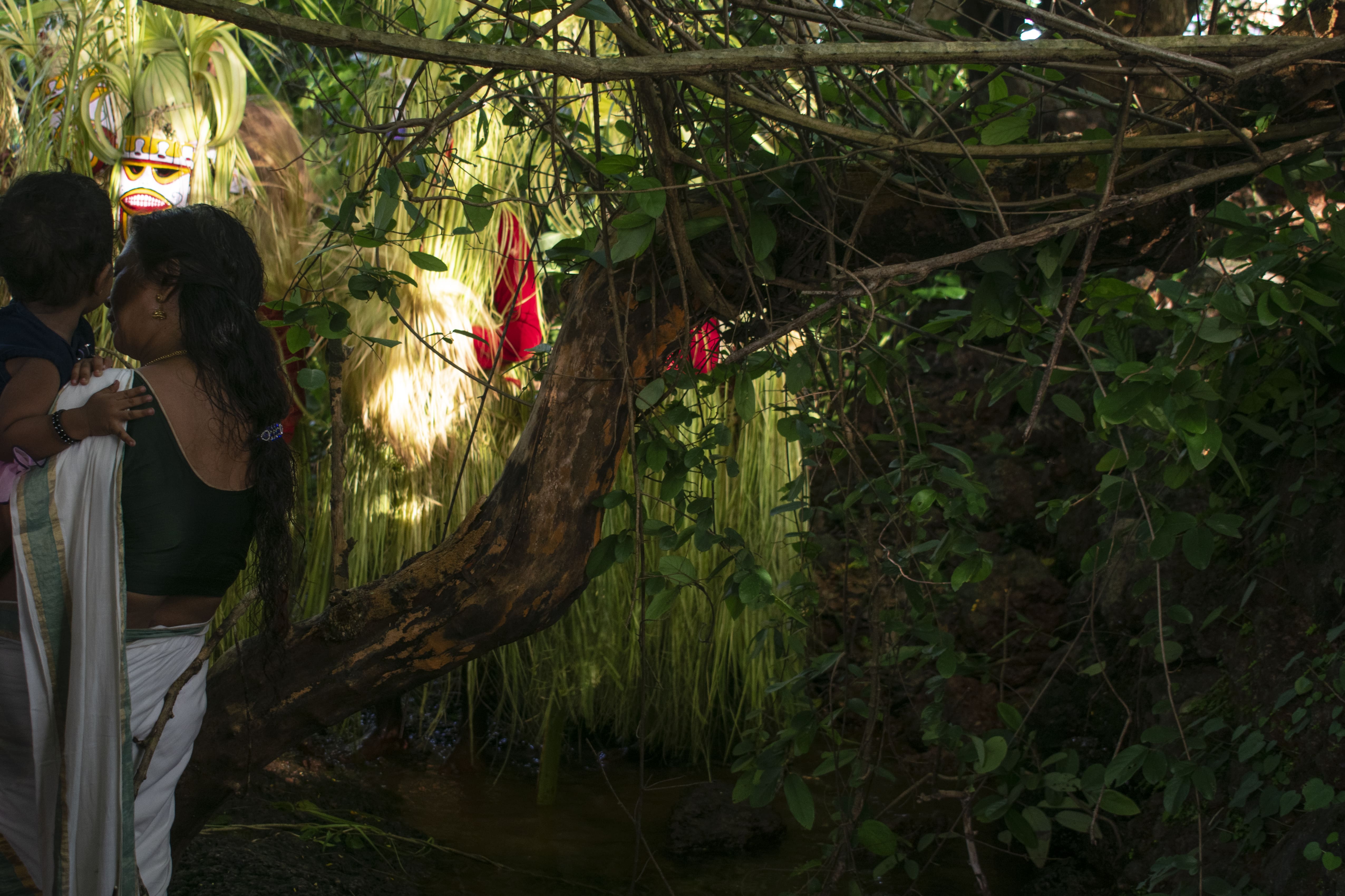
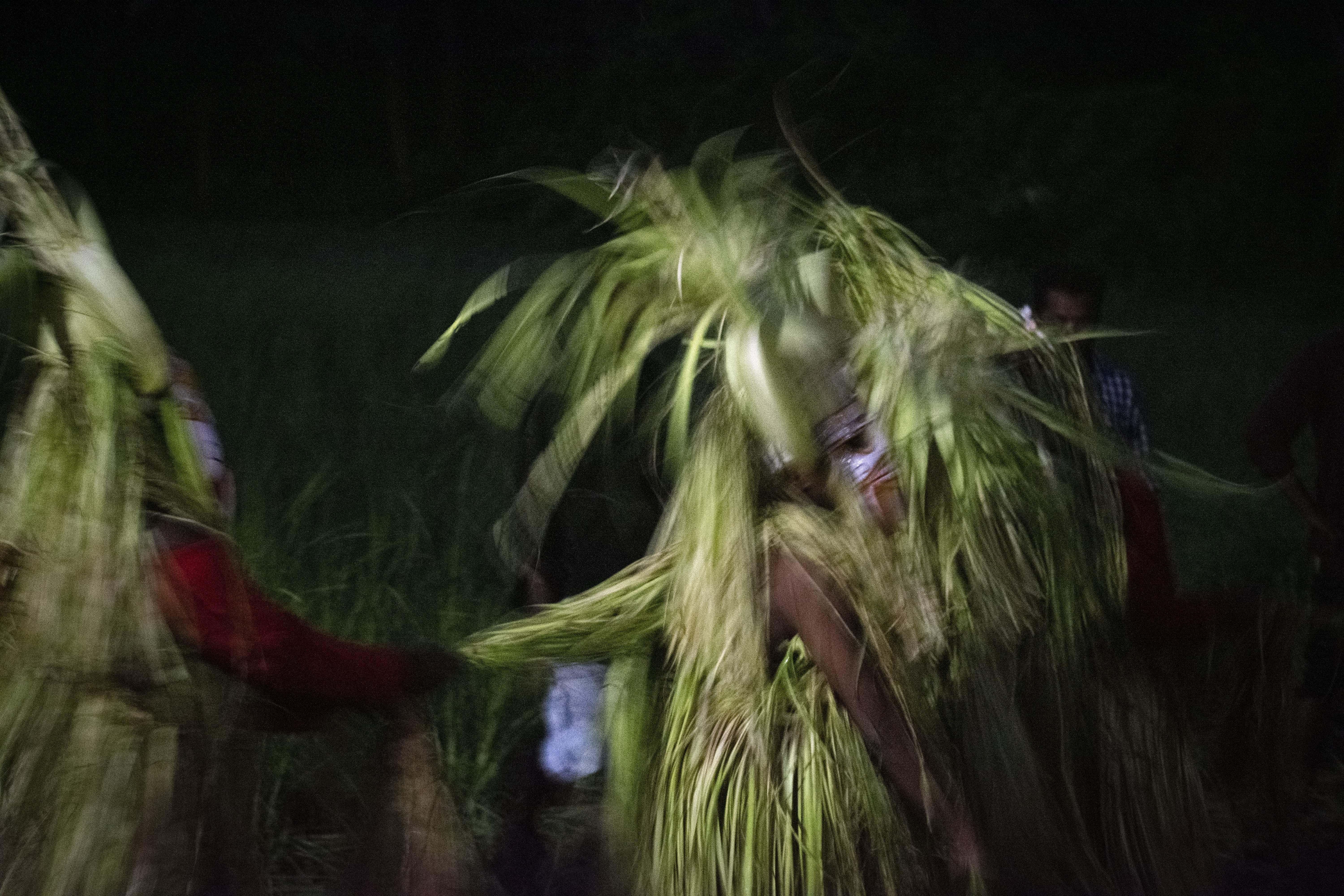
Maari Theyyam is a ritualistic folk artform performed annually in parts of Northern Kerala. The ritual is based on the belief that the Theyyam will take away all the bad luck, such as illness and starvation from the village people, and send it to the sea. So they move around the village dressed in leaf made costumes with face masks and performing a folk dance to the rhythms of percussion music. The performance begins at the temple; converges and diverges at many nodes in the village like near ponds, open plains and culverts; it visits the village houses to conduct rituals; and finally culminates at the seashore to strip off their costumes and throw them into the sea. Therefore scenographically, the whole village is the stage for Maari Theyyam, transforming its landscape into a dynamic, sacred space of performance.
The Theyyam not only moves through these landscapes but also interacts with it through the performer's body. Their aesthetic culture, wild movements, and history of origin portray them as divine ecological beings sprouting from the landscape and disintegrating back to it, while playing the role of a protector.
This creates a symbiotic relationship between the land, its people, and their cultural memory, juxtaposing the mundane and the sacred. Art forms like Maari Theyyam, which are deeply embedded in environmental settings, serve as living reminders of ecological interconnectedness through art in our cultures. When performance and environment become inseparable, they can foster a cultural responsibility towards preserving both.
[1]. illustration of 'maari theyyam' in its landscape and the interaction of the performers' body with the it; Tracing the scenographic evolution of the place of performance ('maadayi para') through different seasons.
[2],[3],[4]. documentation of theyyam visiting village houses, performing in puddles and nature settings. photographed by pournami chandra, courtesy of brm project.


NEW APPROACHES TO DRAWING &
INSIGHTS ON SCENOGRAPHY
FROM COLLABORATIONS IN A
MULTIDISCIPLINARY PRACTICE
ART RESEARCH LAB REHEARSALS PERFORMANCE DEVELOPMENT
Taking Prompts from the Art Research Lab for Drawing
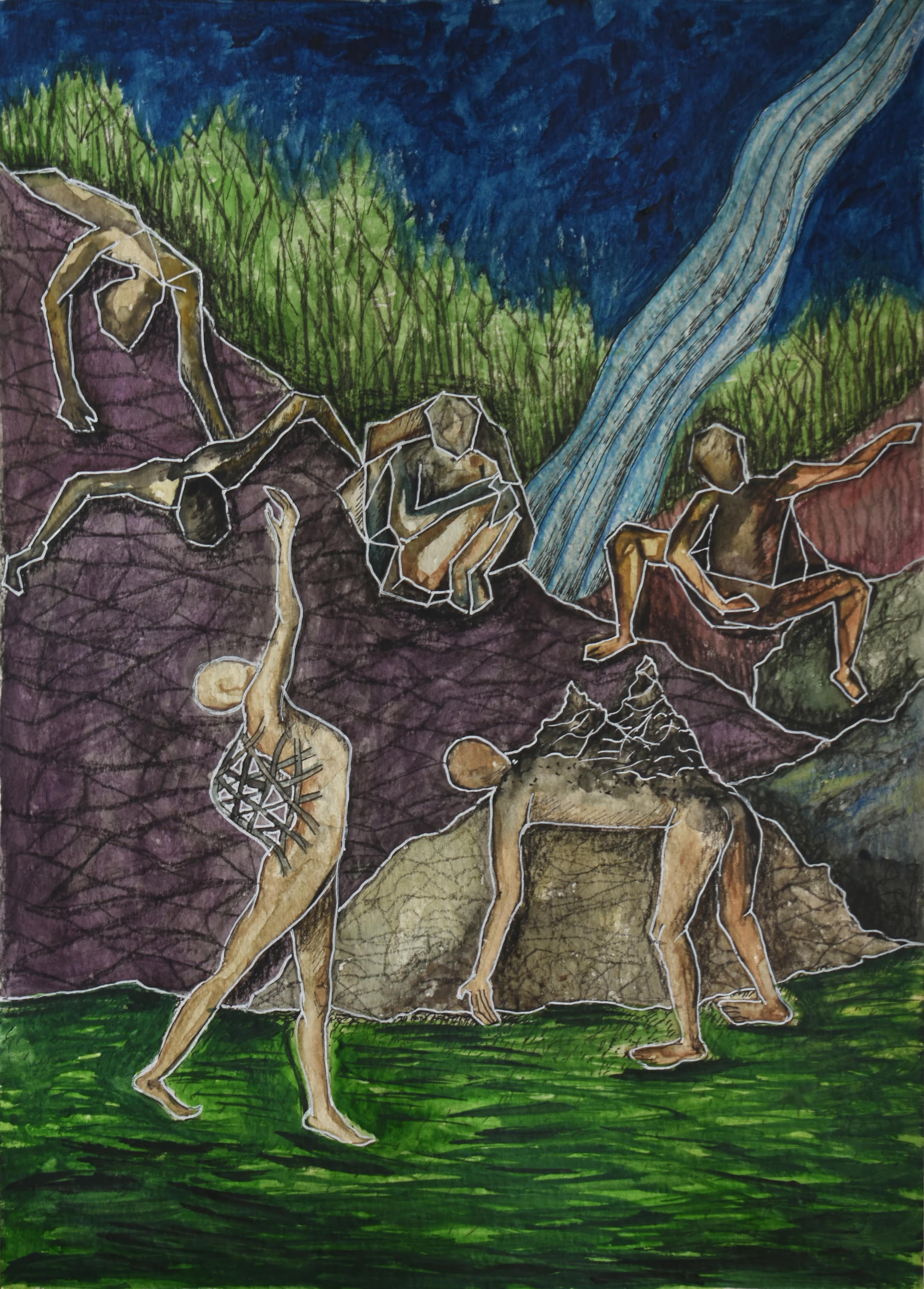
One of the exercises during the research lab was based on the prompt - 'How do you feel the Mountain?'. The performers used their body, space and movement to express it. I tried to use the same prompt for drawing, taking some clues from their ways of movement and expressions.
During this phase of research and performance development of 'In The Blue Houses Dream The Mountains' my work was about making observations, taking notes of the workshop exercises, understanding the script, tracking the development of choreography and perceiving the ideas with which the director and the actors are working together to create an original performance work. That whole process helped me in developing the scenographic drawings of the play. But in the process of drawing, the hand becomes a thinking hand, revealing new possibilities within and over the discussed concepts.

Tracing Kinethetic Lines: Body, Space and Movement
Concepts such as Laban Movement Analysis and Kinesthetics that Kanta Kochhar-Lindgren applied in the performance development with the actors, opened up new perspectives for me to observe the body in space. It demonstrated how the body itself is the strongest scenographic tool to make spaces of different type, scale and feeling for the performance.
It also raised questions of how movement can be turned to drawings; or how the drawings of the body would vary depending on its embodiment of movement, emotion and narrative.
Rather than a codified or symbolic way of recording the moving body, I took a more intuitive line drawing approach as a way of exploring how lines can abstract movements. Although I couldn't make enough progress at the time, I think there would be a lot more potential here to bring the sense of space and emotion as well into these drawings through further trials.
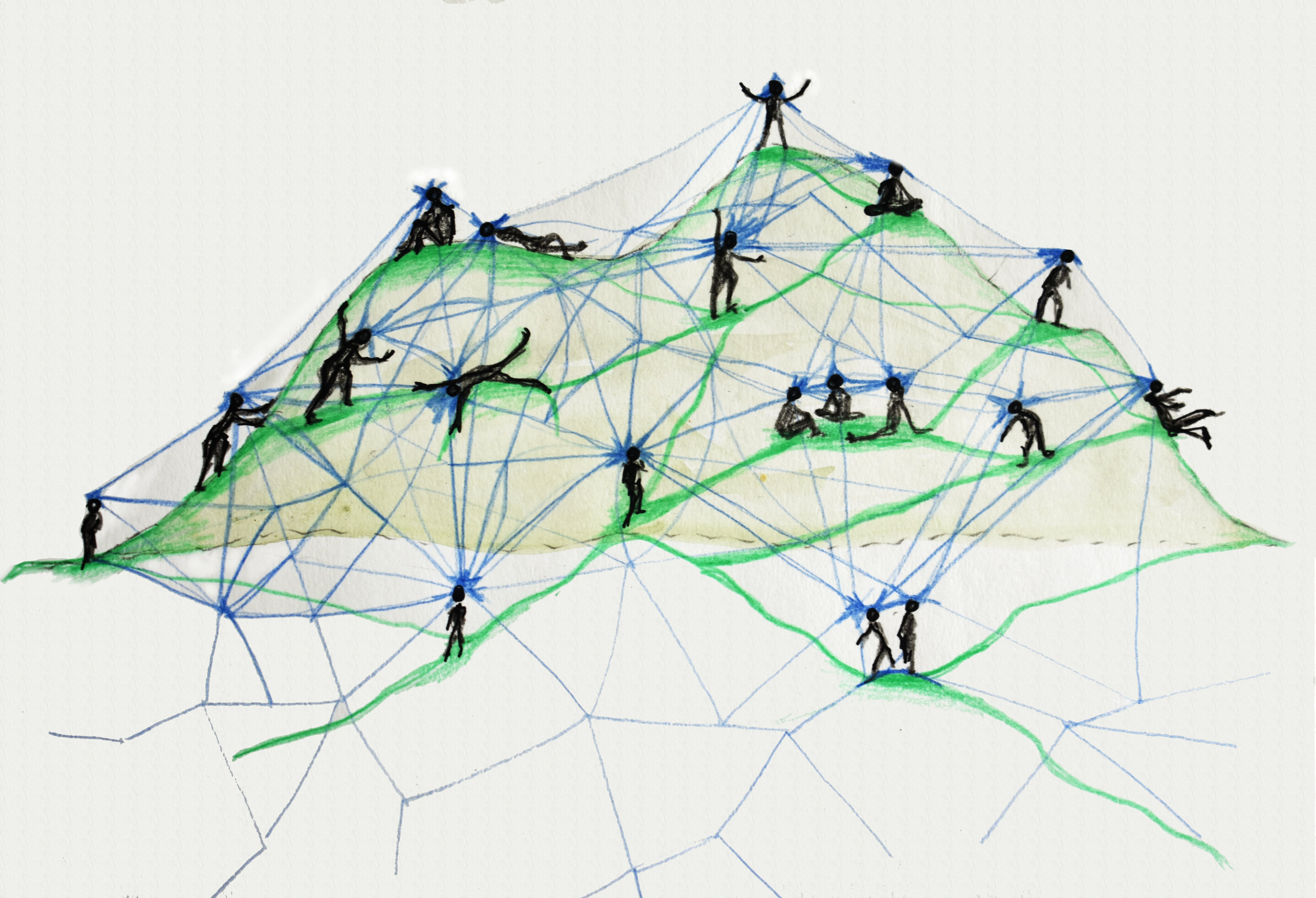
The Image varies depending on Place, Culture and Memories.
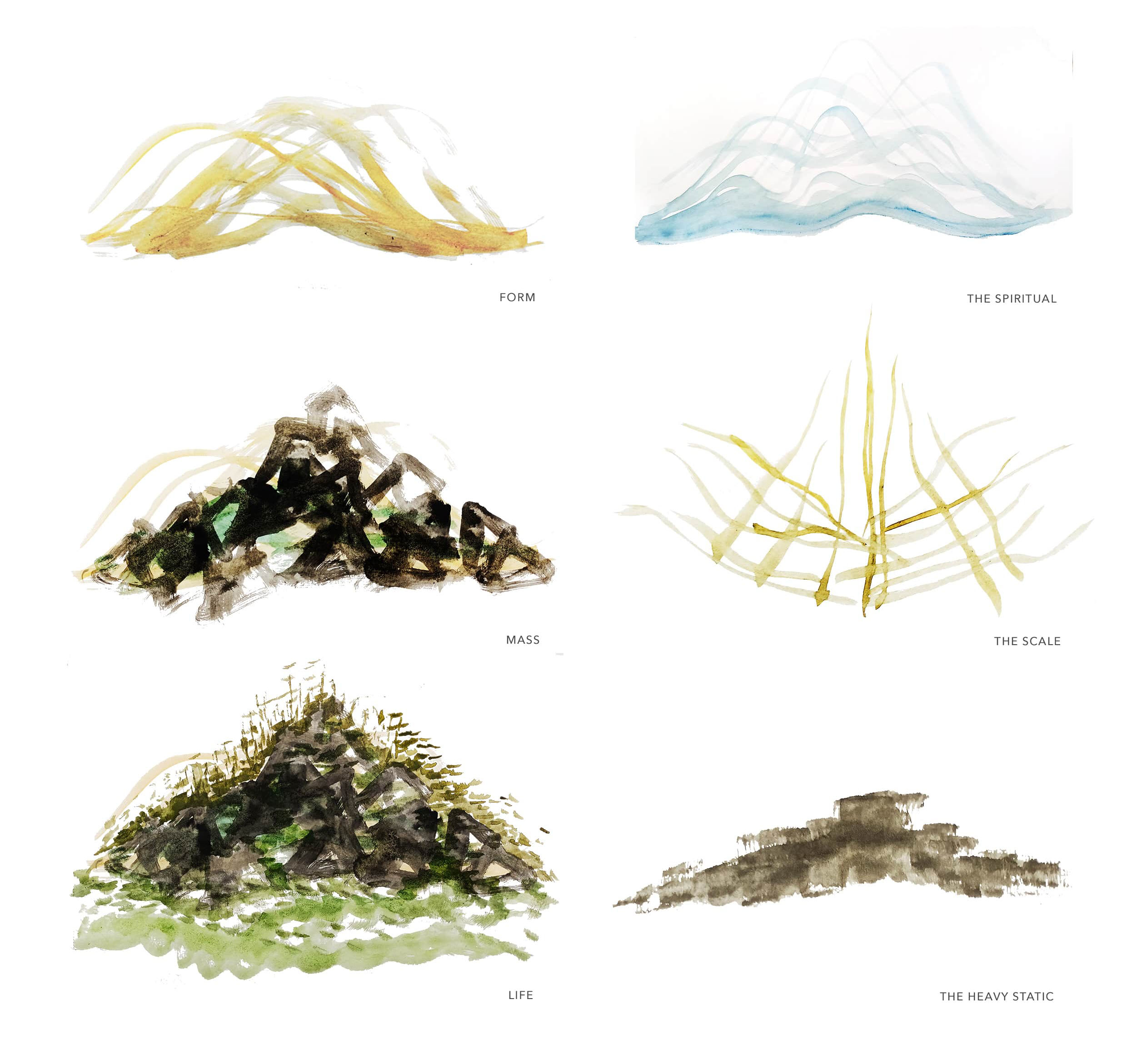
As the artists were sharing their thoughts on what the mountains meant to them, and as the discussions on it progressed, it posed the question of what is the image of the mountain in our collective imaginations.
One imagines mountains as a metaphor of the ups and downs of life. Some imagine them as portals to the divine, as mountains often hold sacred spaces tied to pilgrimage in many faiths. In the cultural consciousness weaved by mythologies and religions, mountains are spiritual symbols, like Mt. Kailash. Some performers shared how they associate it with fear and dark entities, since Kerala myths have demons and witches in the mountains.
Although mountains are seen as inhuman, elusive, and majestic entities within the natural landscape, most people also share a subtle and pleasant connection with them. A trip to the mountains is a common memory for people who do not reside in mountainous areas. For many, they are places of beauty, freshness, and retreat—memories shared with family, friends, or solitude.
What does it mean to people who live in mountainous regions? They are far removed from the influences of globalization and industrial developments of the plains, yet they are vulnerable to exploitation for resources. This situation requires them to play the role of protectors while also being humble worshipers of their habitat.
So then the image of the mountain and the relationship with it varies, depending on place, culture and memories.

IDEOGRAMS: Abstracting Climate Change Data into Performance Visuals
One of my tasks from the director was to create a series of ideograms on climate change which would serve as projection visuals for specific scenes of the play. In order to develop them, I took inspiration from several infographic and codified languages.This included the mudras of Kutiyattam as well as Indian and American sign languages, which were frameworks already integrated within the performance.
Rather than the outcome, there was broader learning about different types of scenographies that can be applied in a work and how research data can be integrated into performance spaces. Scenographer Louise Ann Wilson addresses ‘non-verbal scenography’ with the usage of metaphors, abstract images and symbols. This can be traced in different forms and purposes whether in Kutiyattam or in Kanta Kochhar-Lindgren’s scenographic practice.
This exposure allowed me to begin building questions that extend beyond this project —what would symbols and abstractions mean in creating performances, spaces, or experiences?; What are the effective ways of integrating them?; What purposes —communicative, poetic, provocative, nostalgic— can they serve in scenographic practices?
Translating or visualizing the ideas in the script, discussions and rehearsals.
Studying the site, spatial design, movement, and soundscape of the performance.
Imagining alternative scenographies of certain scenes in the script.
a subjective and sometimes collaborative reflection or interpretation of many symbols or metaphors in the performance. Drawing attempts to convert the underlying concepts and themes that the director explores in her work into images.
Textural, geographical and sound mappings of the play.
The iterative sketches for the design of set, props and costumes —Thinking a visual and material culture to make the concepts into tangible designs that are buildable and scenographically effective for the performance.
Drawing in scenography can transcend from a mode of representation in scenic design and evolve into a dynamic dialogue of ideation, iteration and expression — weaving concepts, body, movement, space, and narrative to support performance development.
Eventually the kind of drawings developed, revealed the different layers one can work with in scenographic practices, from spatial design to soundscapes. The process reaffirmed drawing as a profound tool—not only for recording—but for analyzing, speculating, and innovating in scenographic practices both in theater and beyond.
The drawing process for ‘In the Blue Houses Dream the Mountains’ involved a lot of repeated reading of the script/ notes and putting out the thoughts on paper. Drawing itself is a way of thinking. There is a lot that happens on paper with tools, as if we have thinking hands.
The documentation of drawing within scenographic practices was very little, hence initially it was hard to form reference points and craft an approach towards scenographic drawing. This was overcome through reading literature on scenography and looking into artists and architects like Rudolf Laban, Bernard Tschumi, Oskar Schelmer and others who work with similar concepts around performance, body and movement.
Beyond the centrality of scenography in performance art, the research examines scenography through various other concepts and practices connecting body, space, environment, movement, architecture, performance, psychological space, and drawing methodologies. This breadth posed a challenge in limiting the scope, given scenography’s vast potential for interpretation and application in various forms. However, this openness also provided the freedom to creatively explore and experiment, particularly in the approach to drawing.
Director, Set Concepts : Dr. Kanta Kochhar-Lindgren
Designers: Pournami Chandra, Nayan Rathan
Artists, Set Fabrication: C P Mohanan, Vishnu Shaari
IMAGE CREDITS: COURTESY OF BRM PROJECT
ALL RENDERINGS, DESIGN SKETCHES, ILLUSTRATIONS: POURNAMI CHANDRA
MODELS: NAYAN, POURNAMI.
PHOTOGRAPHS: BRM PROJECT

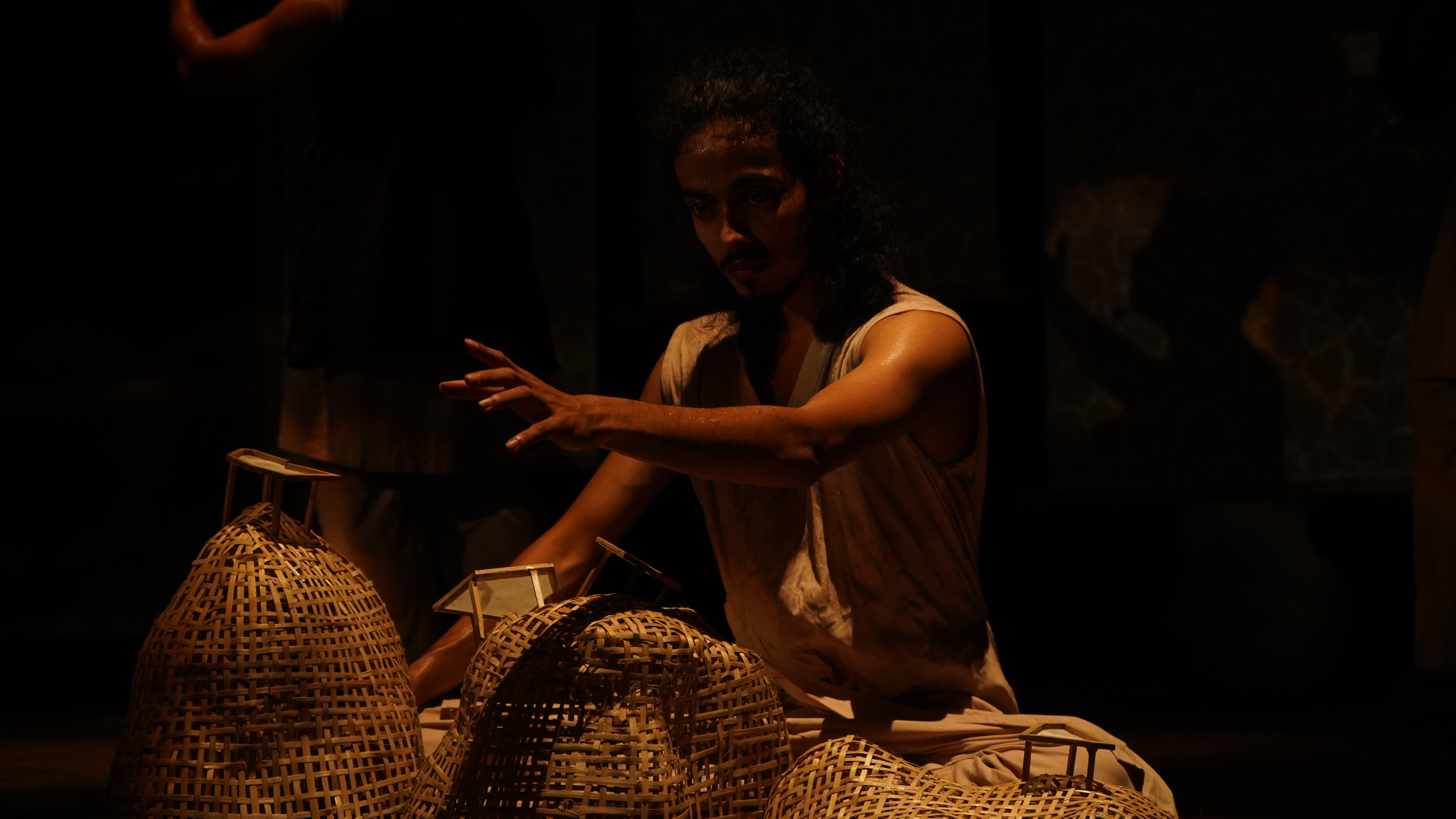
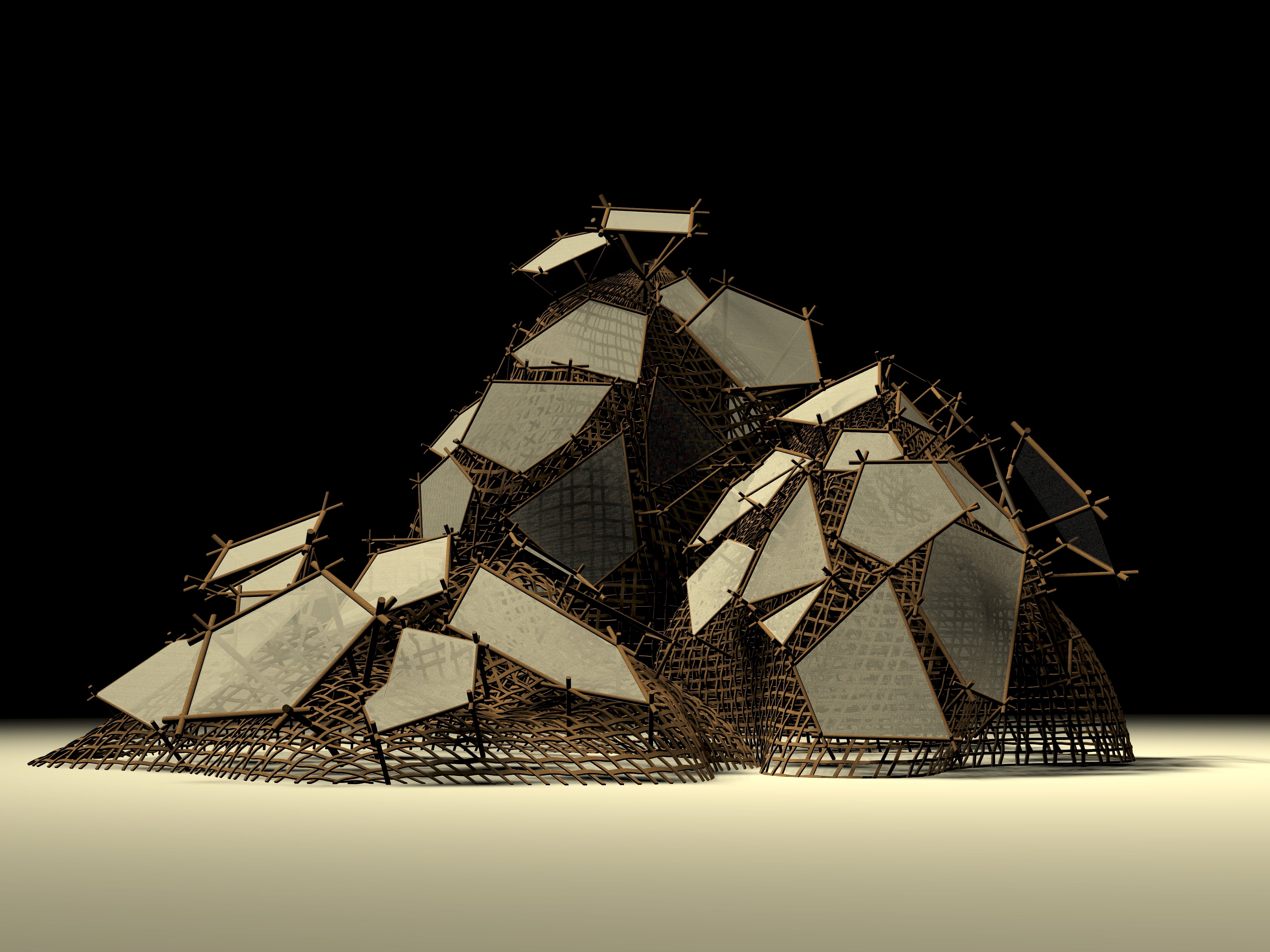
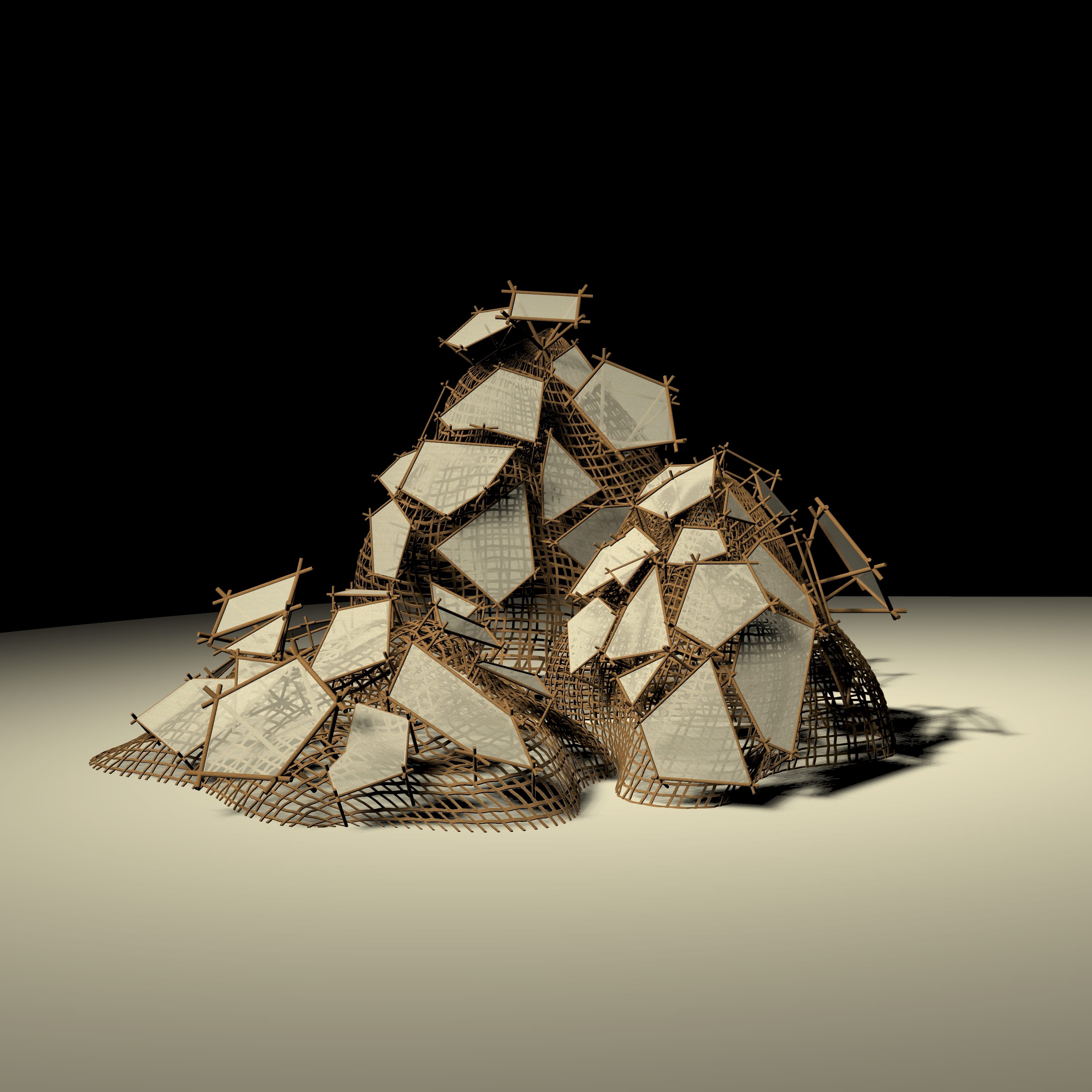
The scenography of this work delves into the realm of eco-aesthetics, aiming to revive the practice of blending art and ecology. We were directed to follow sustainable set design practices. Bamboo and paper were used as the primary materials in all designs, which were materials that the director often explores in her practice. Portability was also a key requirement for the set.
Kanta Kochhar-Lindgren provided a design brief that outlined the conceptual framework, and specified the various set and prop components needed for the production. This brief formed the foundation of the design process.
Further discussions with the director on the script, references, iteration and nuances of the fabrication would inform the design development.
In the initial phase of the design process, I worked with designer Nayan Rathan to develop the designs of key components of the set, conceptualized by Kanta Kochhar-Lindgren. We had several discussions and brainstorming sessions with the director, to translate her vision into tangible designs, following a process of multiple iterations through sketching and model-making. Then, we partnered with artists C.P. Mohanan and Vishnu Shaari to construct and fabricate the approved designs. Therefore all designs are the result of collaborative work.

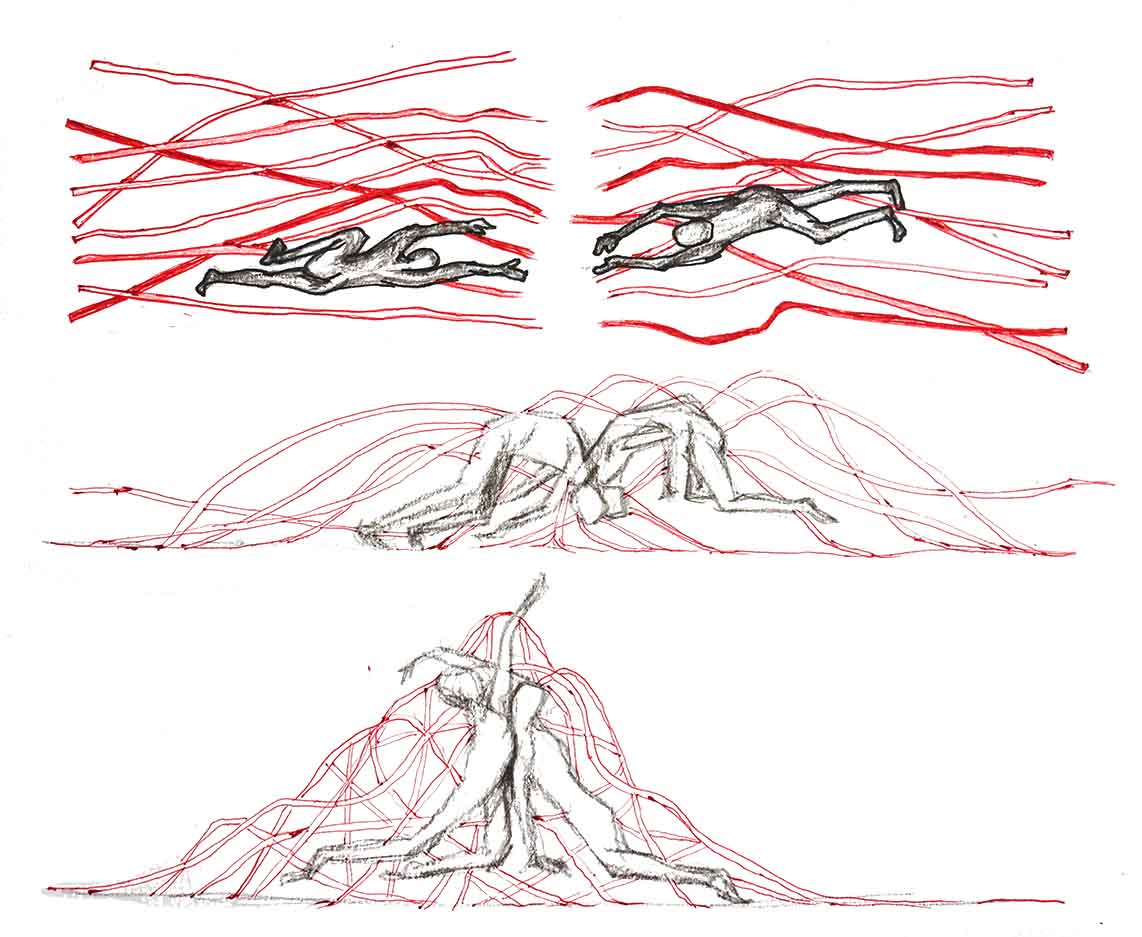
MOUNTAINS —
THE MARKINGS OF GEOLOGICAL TIME
Toy Mountain, Sculptural Interactive Component of the Set
The director’s vision was to have mountains explored in different scales, forms and crafting techniques. In its smallest scale was a toy mountain. Initially the requirement was to create a design with joinable components that can be played with for the actors to build a mountain on stage. Later the direction needed to have the mountain appear on stage as its own entity. Then we leaned on to a design that would be sculptural on stage but also has the aspects of assemblage, interactiveness and movability.
conceptual drawing inspired from the script and design discussions —imagining performing bodies through the concept of geological formation of mountains and interpreting it in the materiality of bamboo.

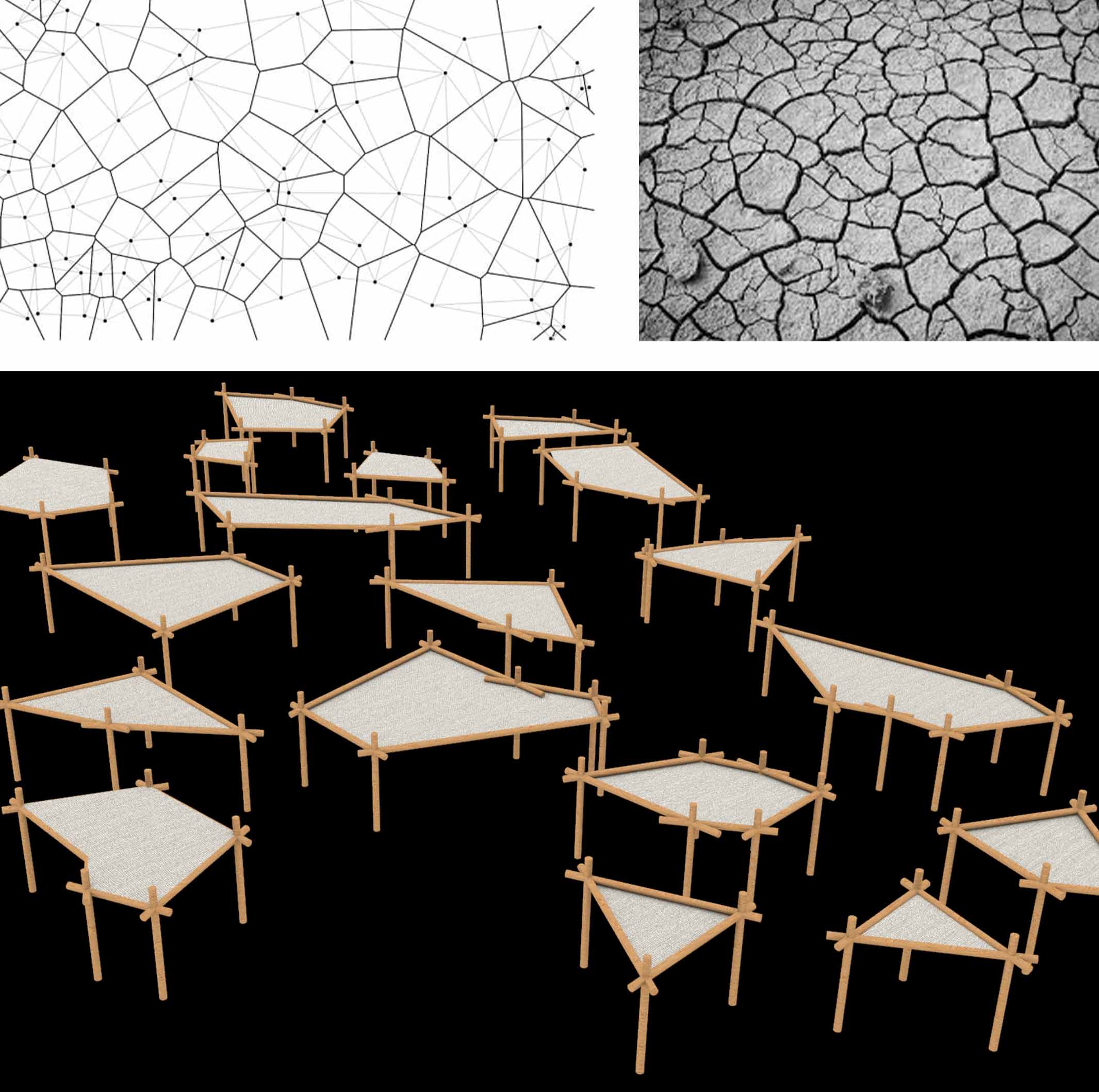
We came up with a form that reflected the geological processes of mountain formation: the collision of tectonic plates, the folded waves of rock, and the cracking textures that emerge when molten rock cools.
We wanted to have the blockiness of the mountain yet maintain the dreamy theme of the play. So we combined ideas in the form of bamboo mesh and irregular paper blocks that can have different transparencies to reflect light. The materiality of bamboo and paper also played a significant role in shaping the design.
The result was a sculptural, interactive element that allowed performers to build and carry the mountain on stage. This design approach blended narrative, materiality, and form.
[1]. voronoi geometry, which is a common geometry found in nature such as in cracking of rocks; [2]. design elements recreated in the same geometry.;[3]. design sketches for the toy mountain
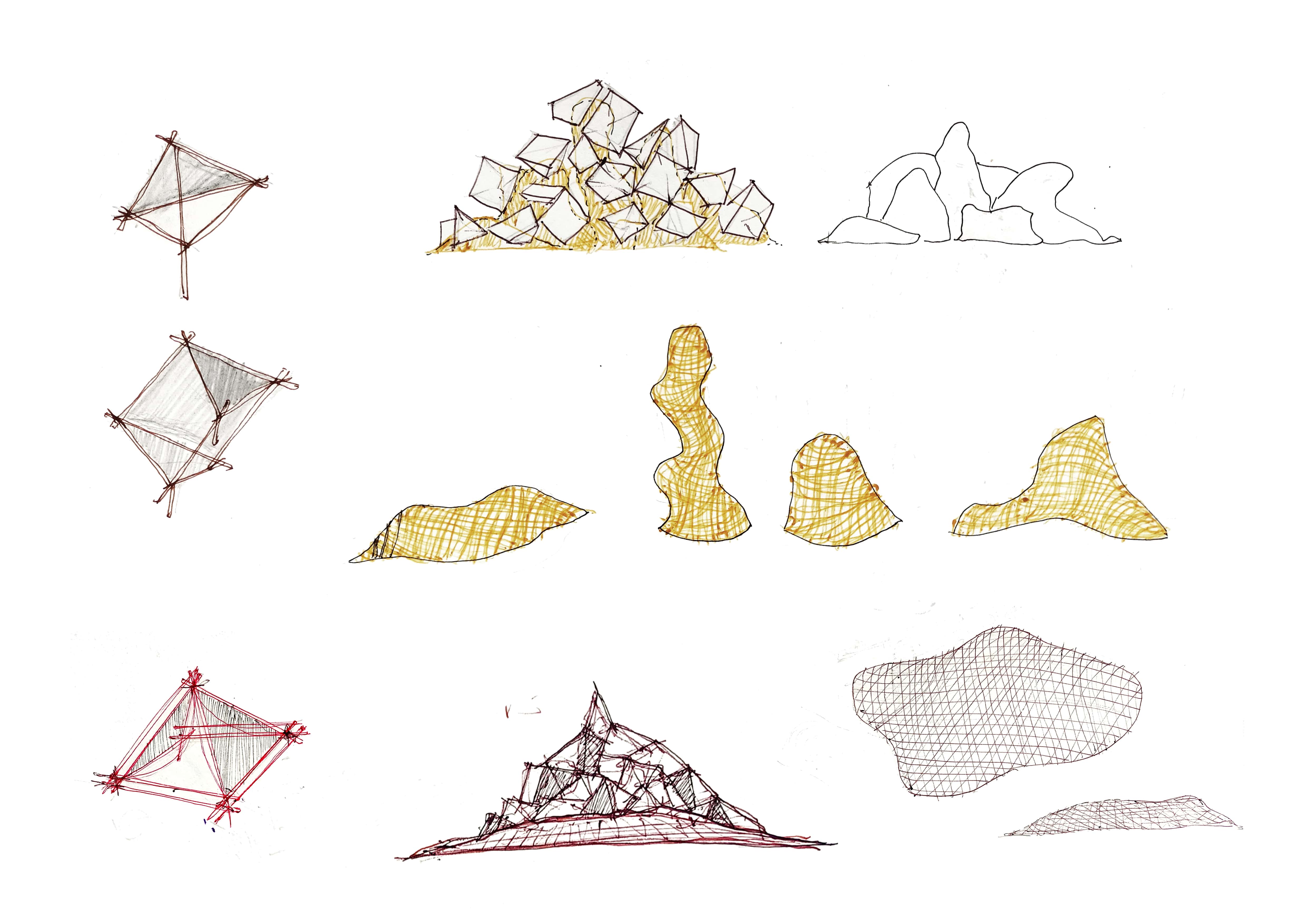
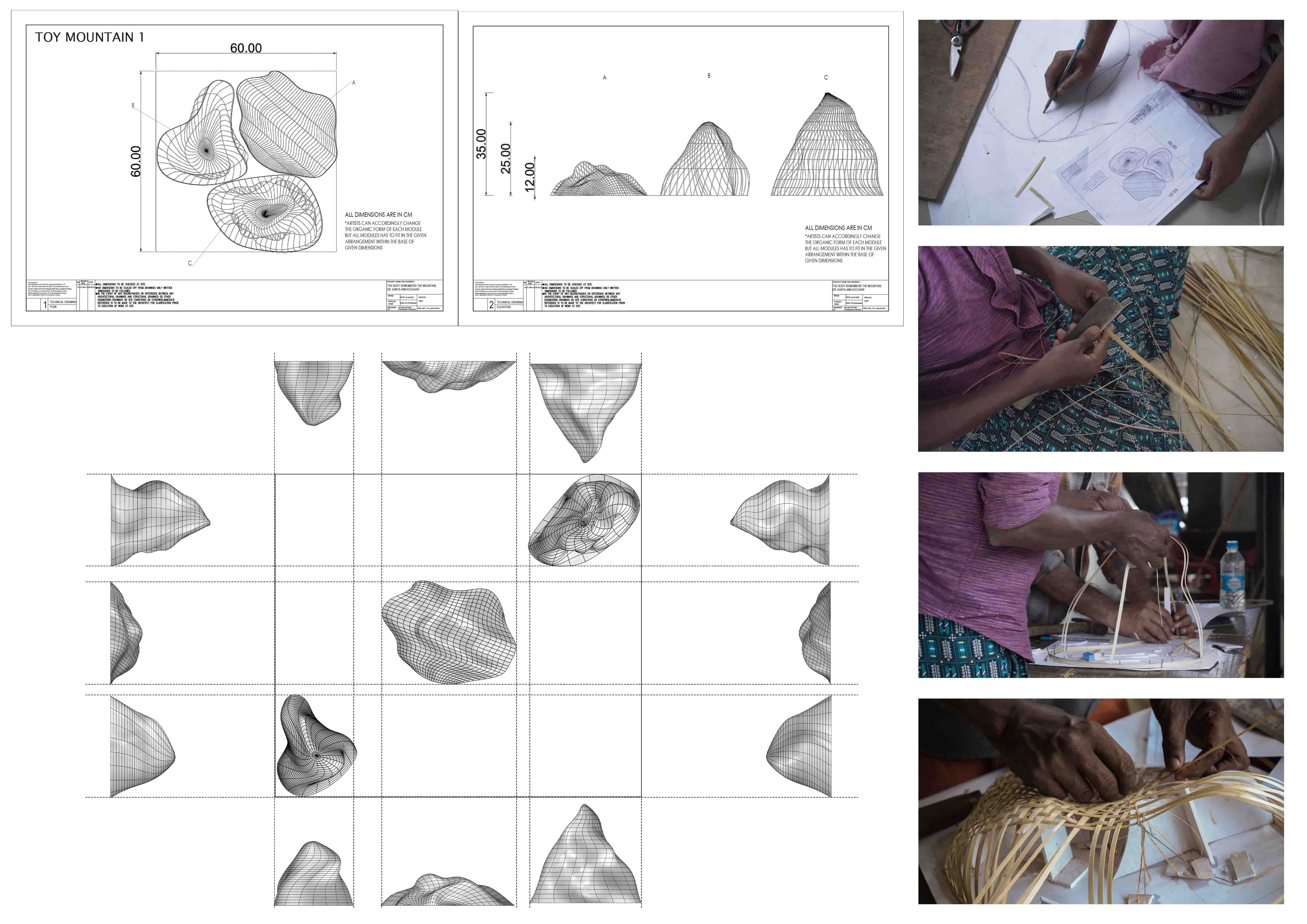
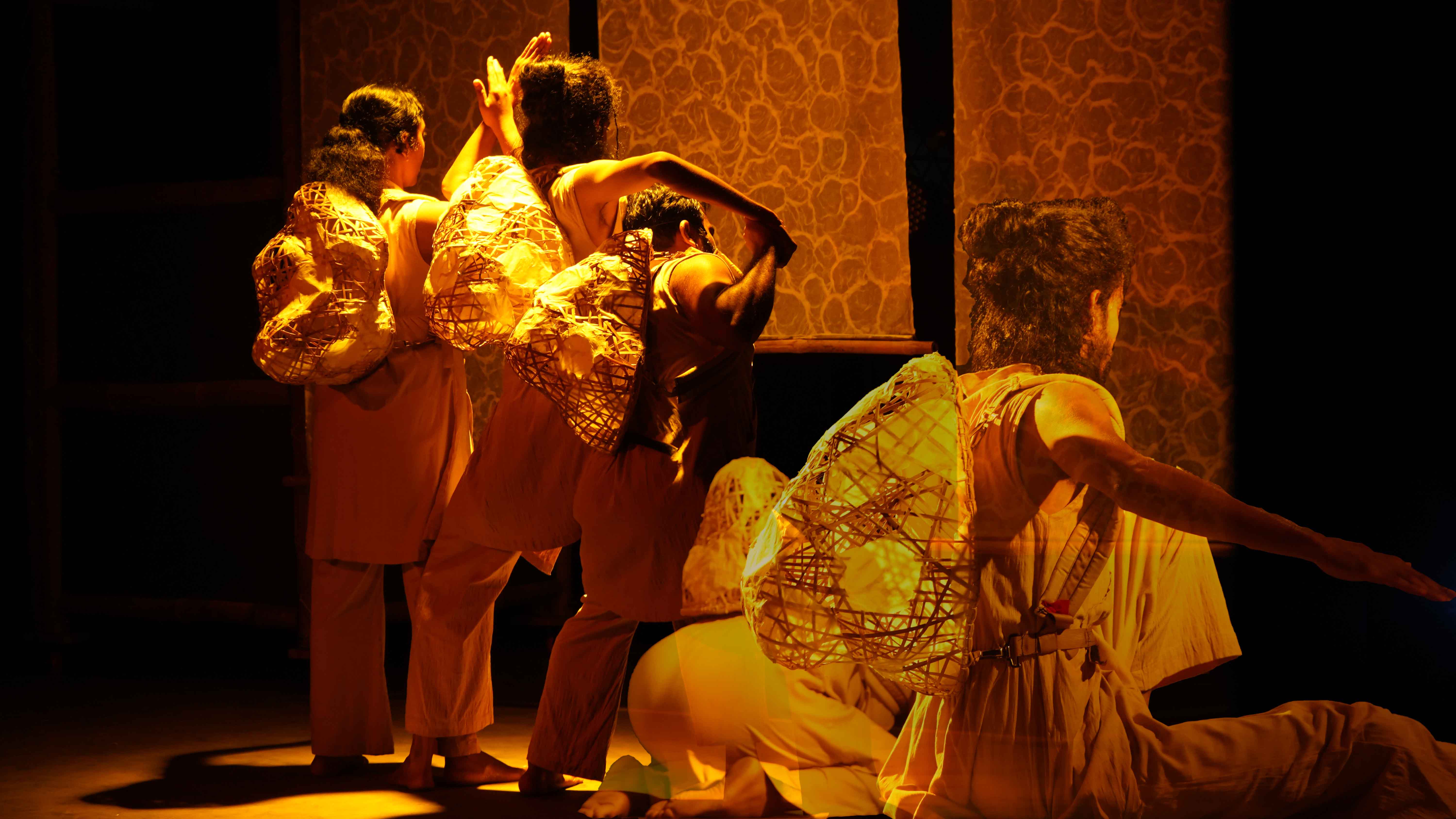
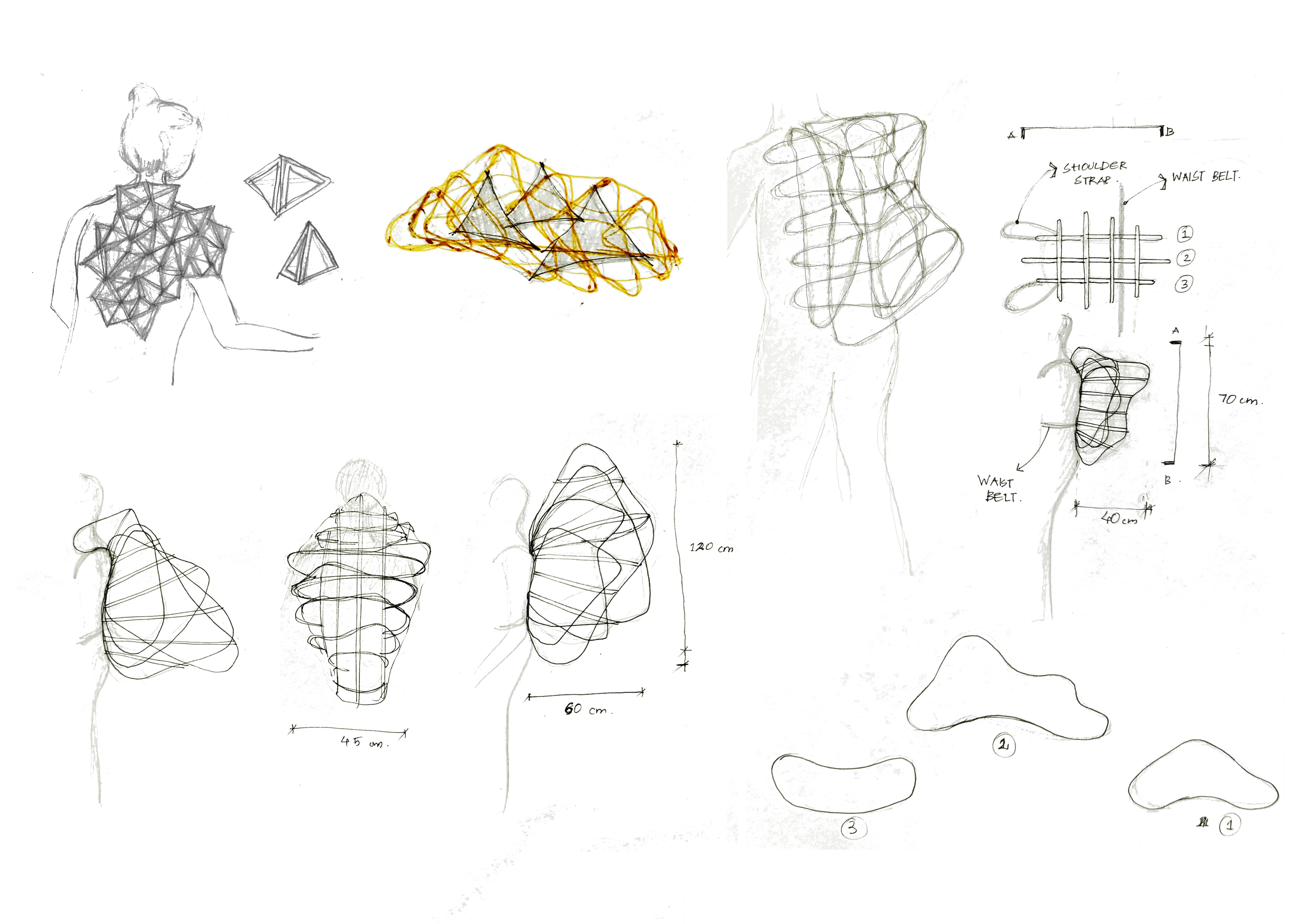
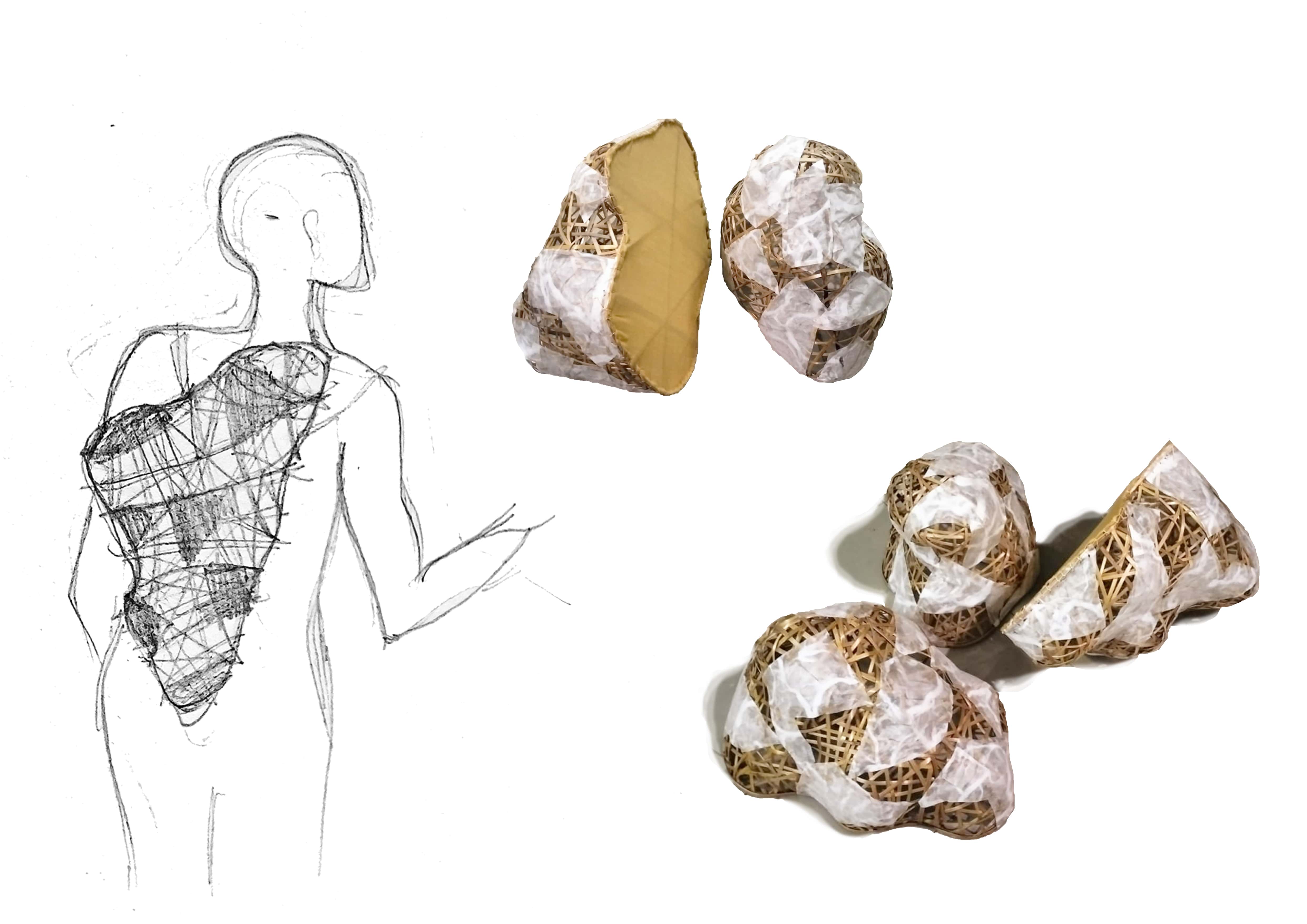
This design focused on crafting the mountain as an extended part of the body, in order to invoke an interface between human and mountain. In the making we explored a different bamboo weaving pattern and usage of the Washi paper, to have a textural contrast with the toy mountain.
iterations and process sketches for the design of backpack mountain
We also investigated the design of the blue house as a movable upstage component; hanging backdrop paper panels, and costumes. Artist drawings on these discussed ideas were generated by me and later technically developed and constructed by other team members.
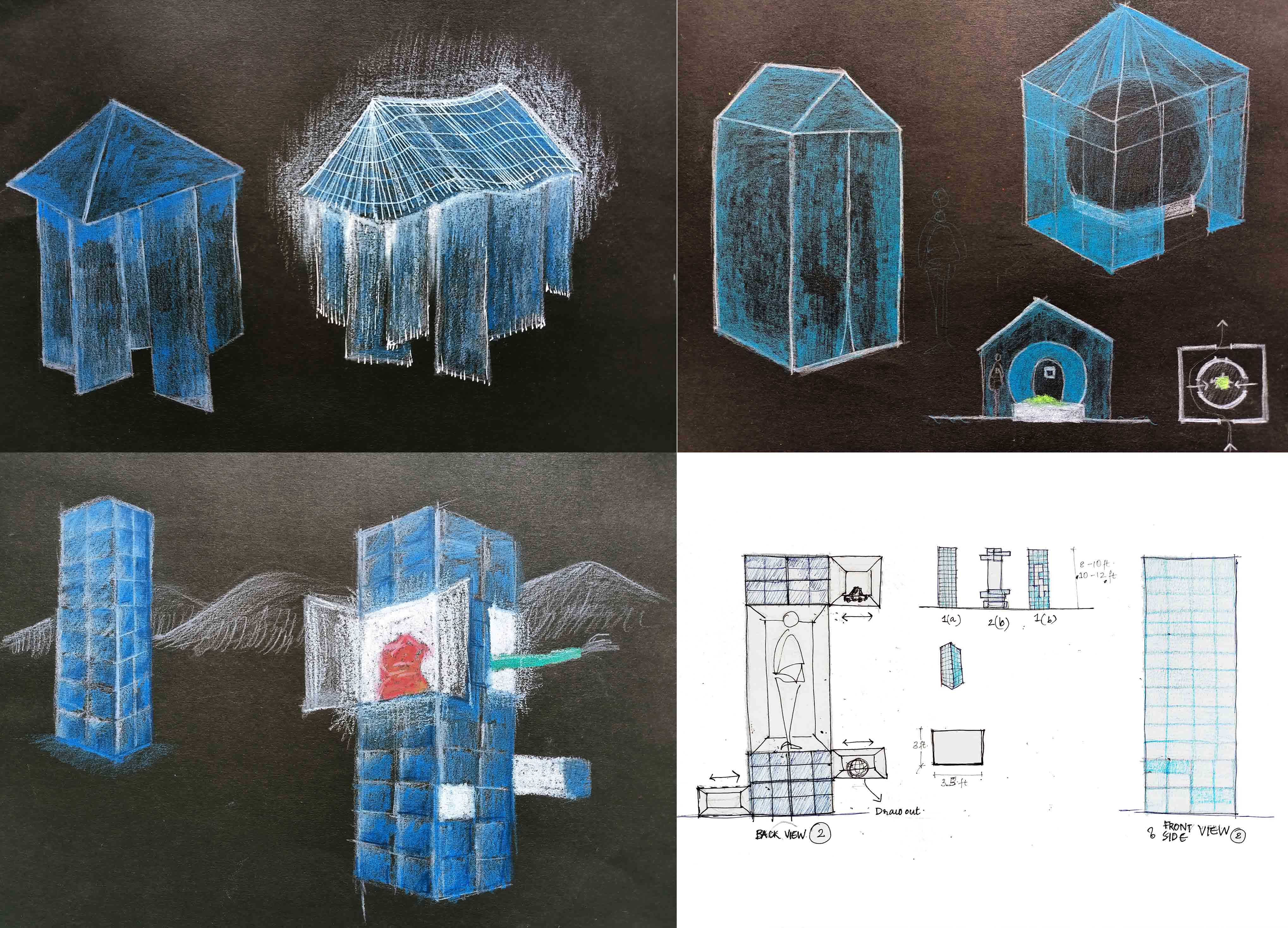
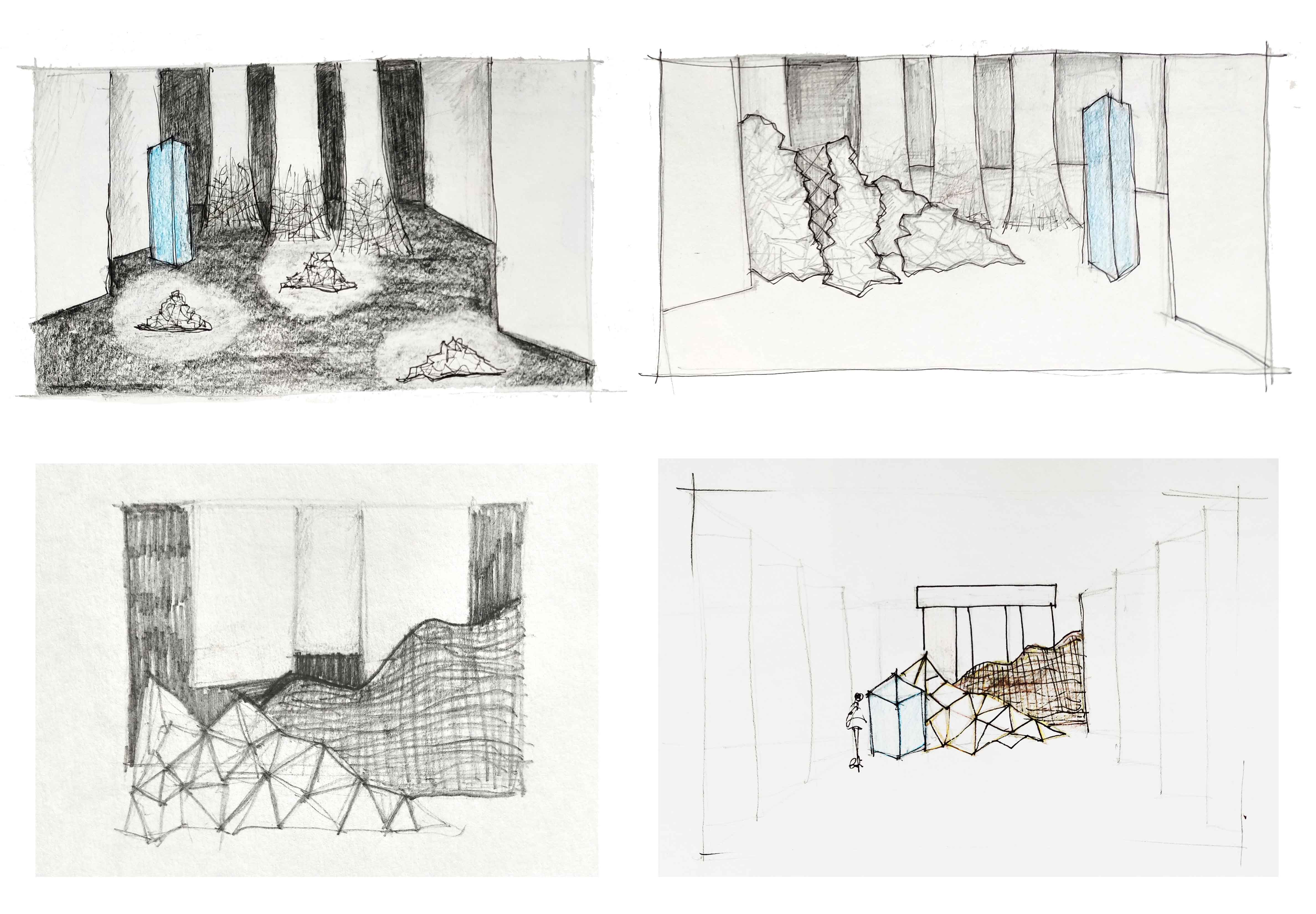
Applying architectural principles to space-making in performance art and learning scenographical aspects of architecture.
To be a flexible team worker and collaborative designer in multidisciplinary settings.
Exploring material cultures and design strategies for storytelling in space.
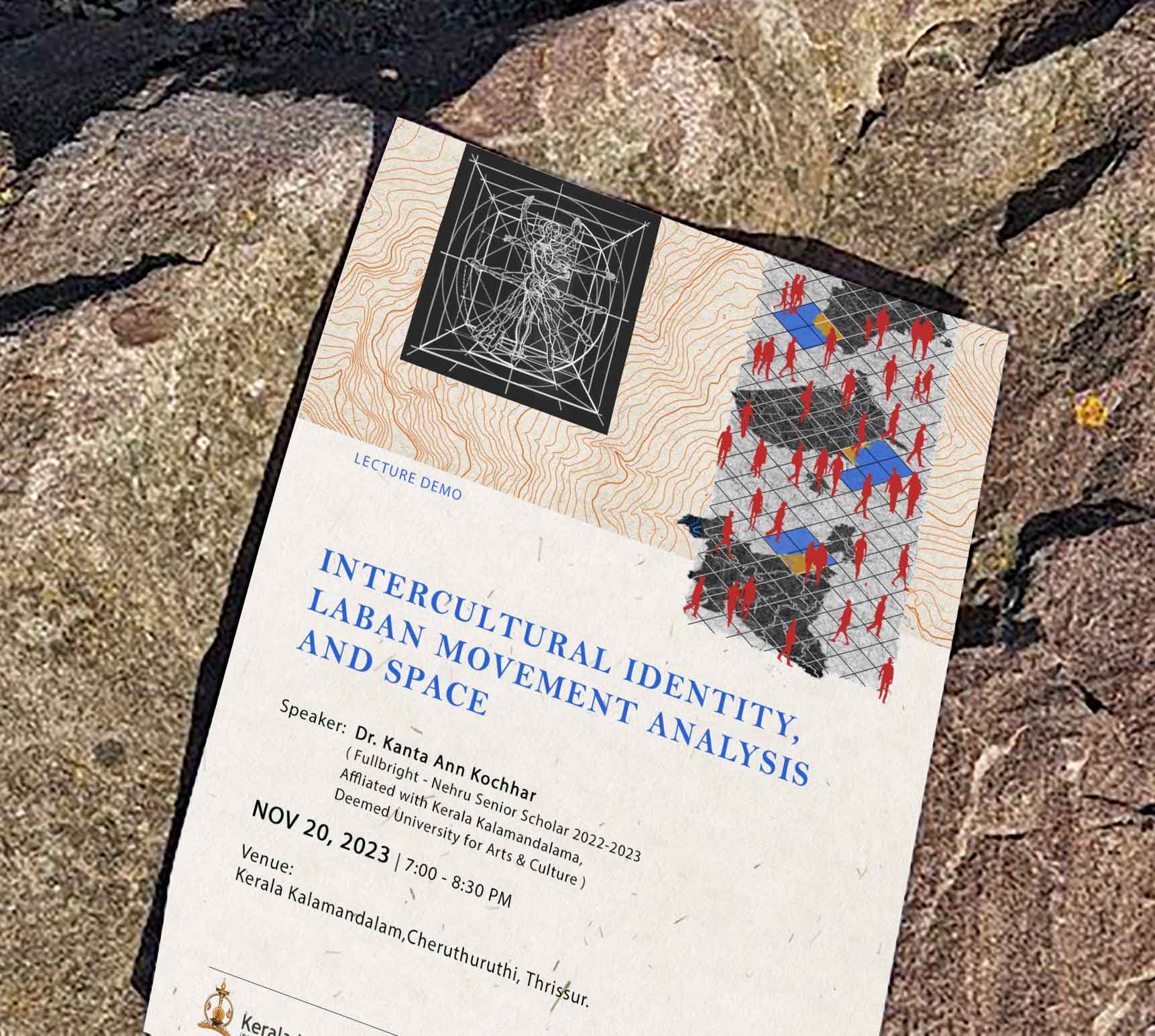
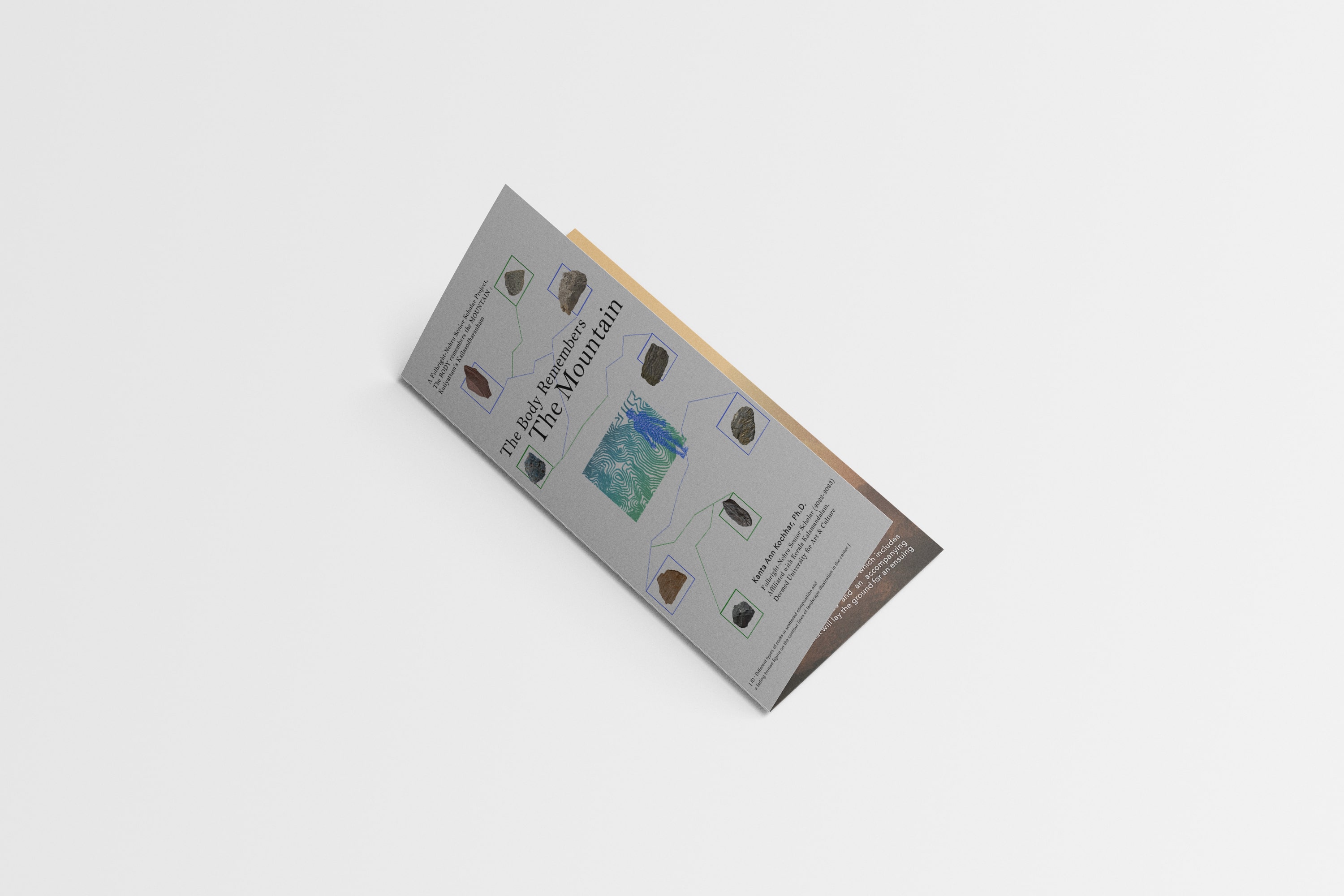
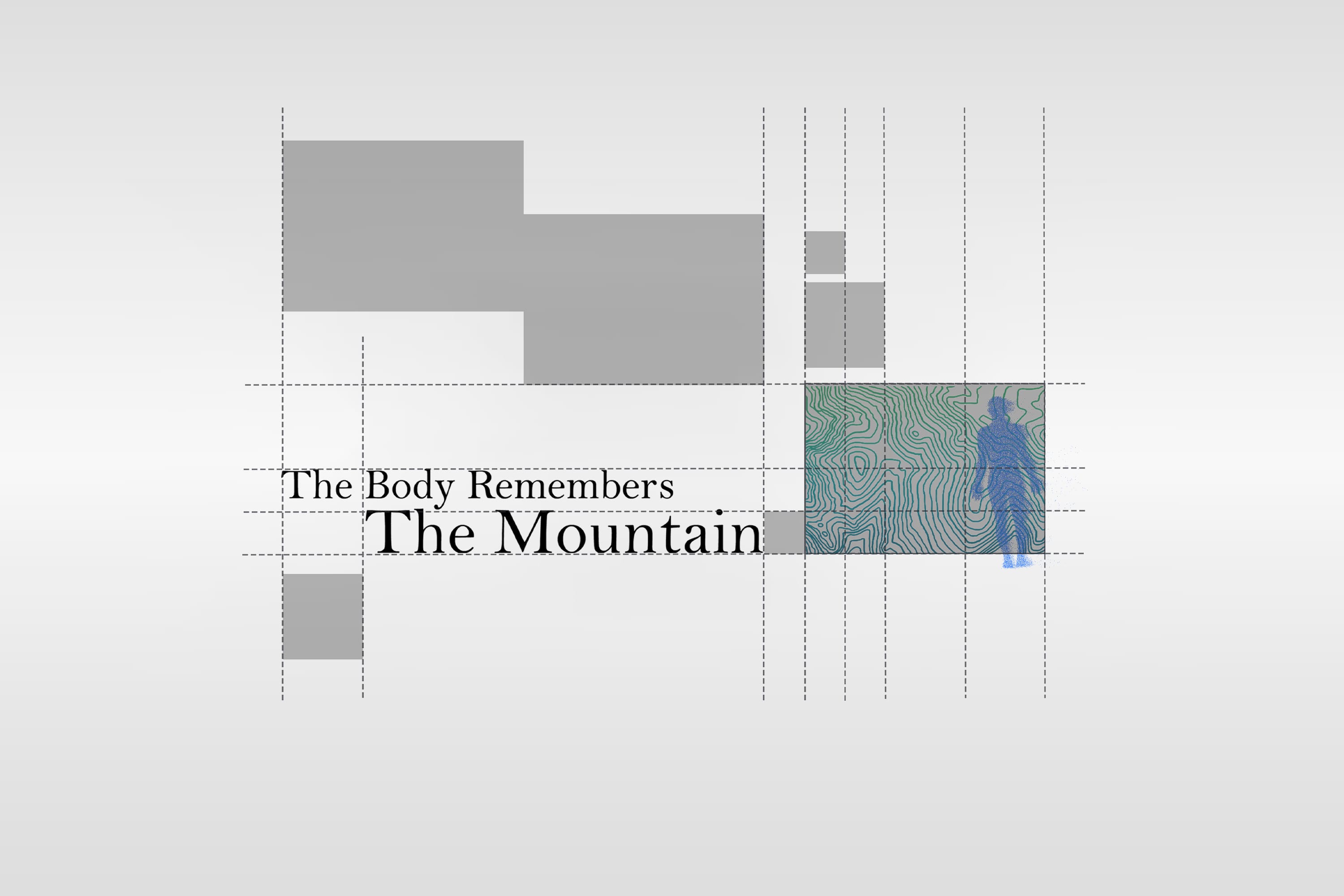
BRANDING CONCEPT
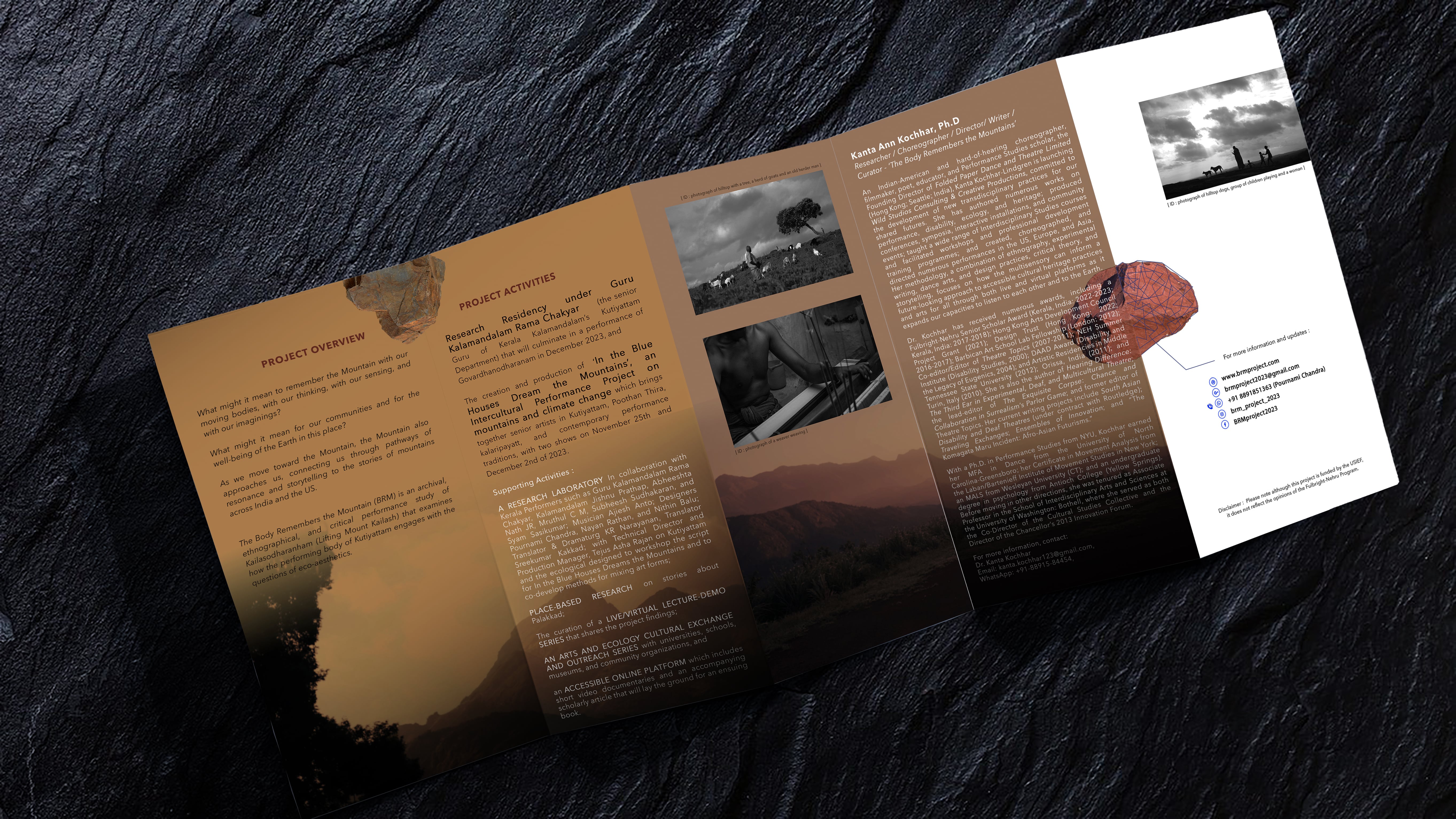
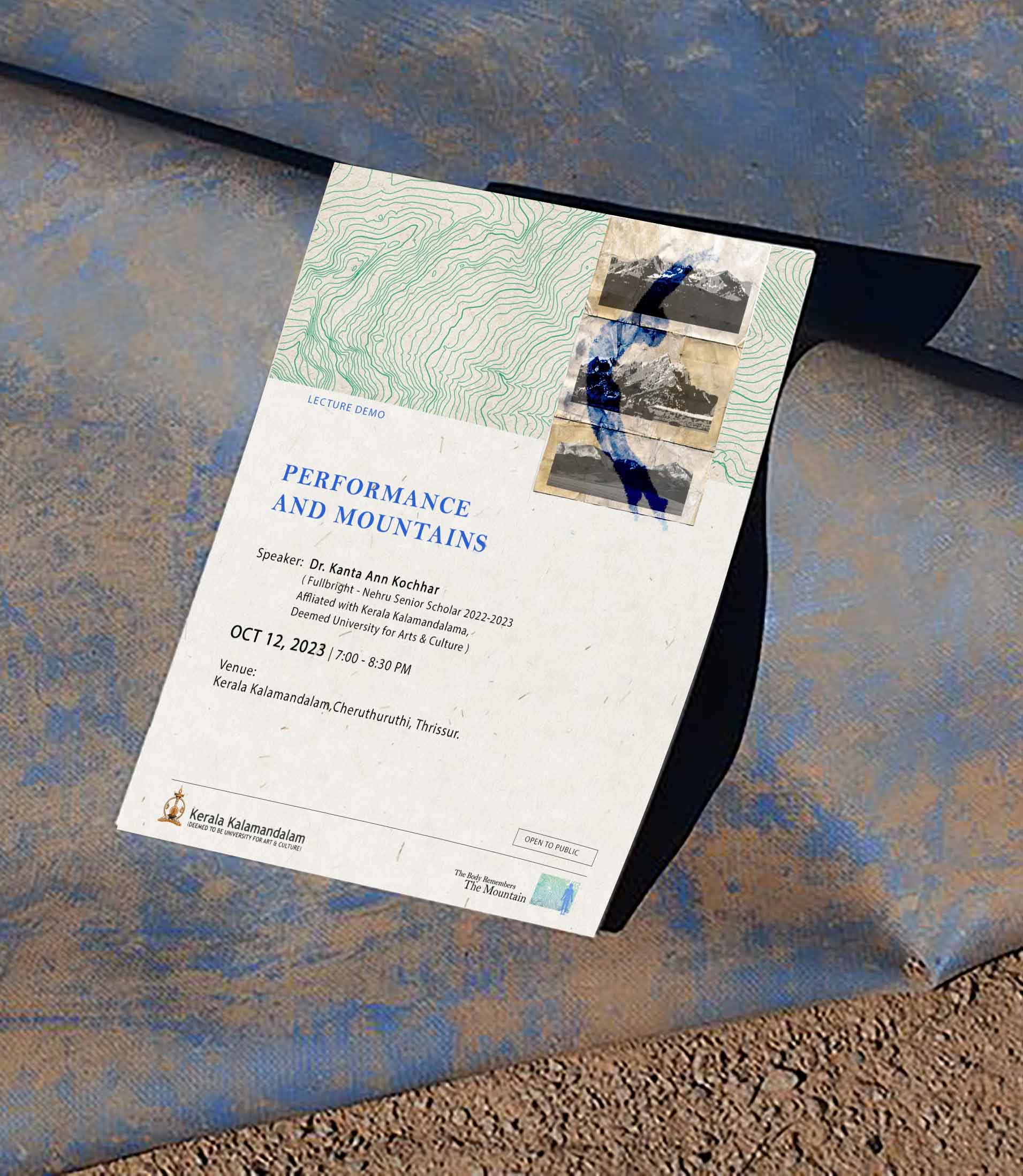
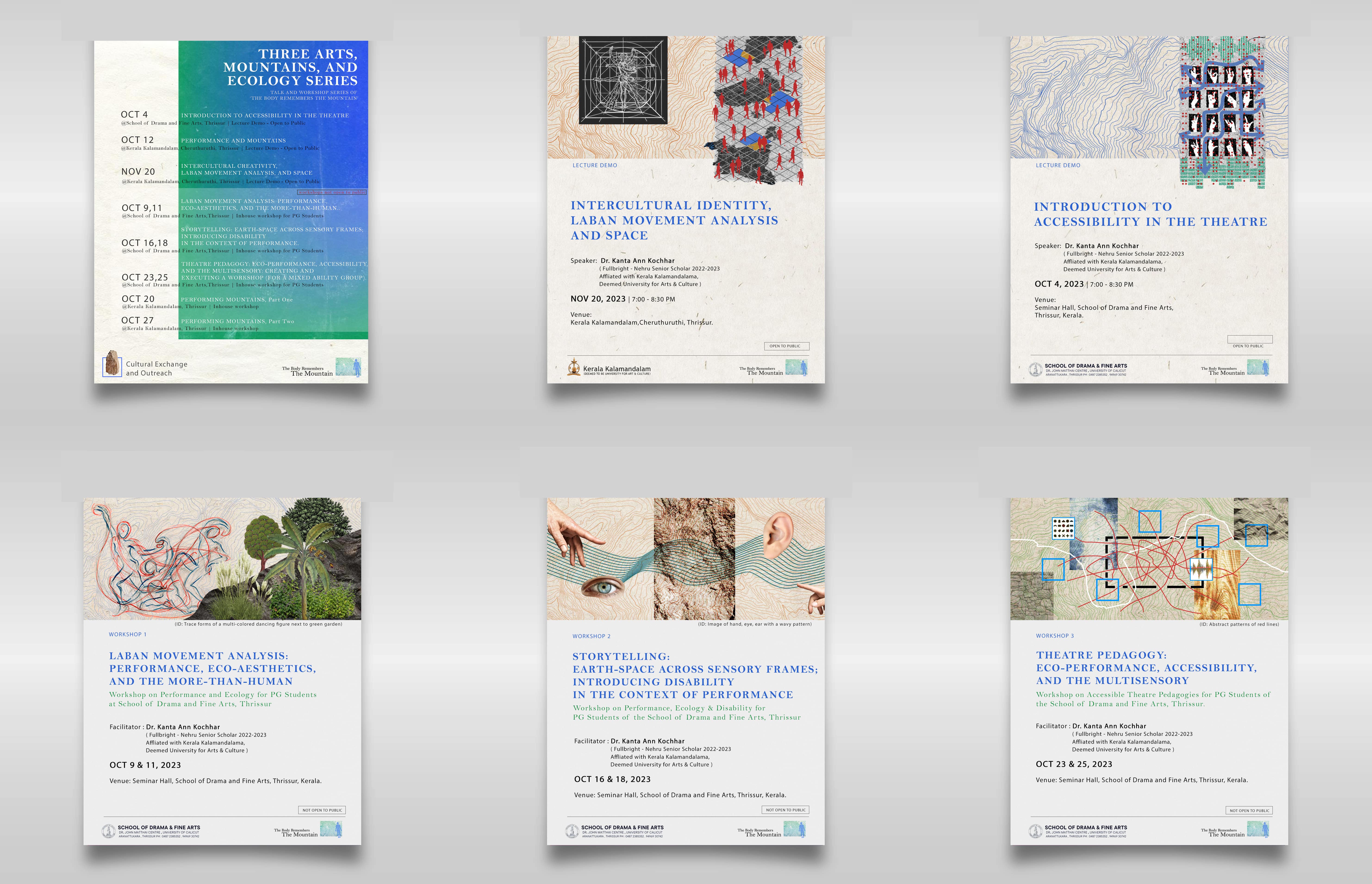
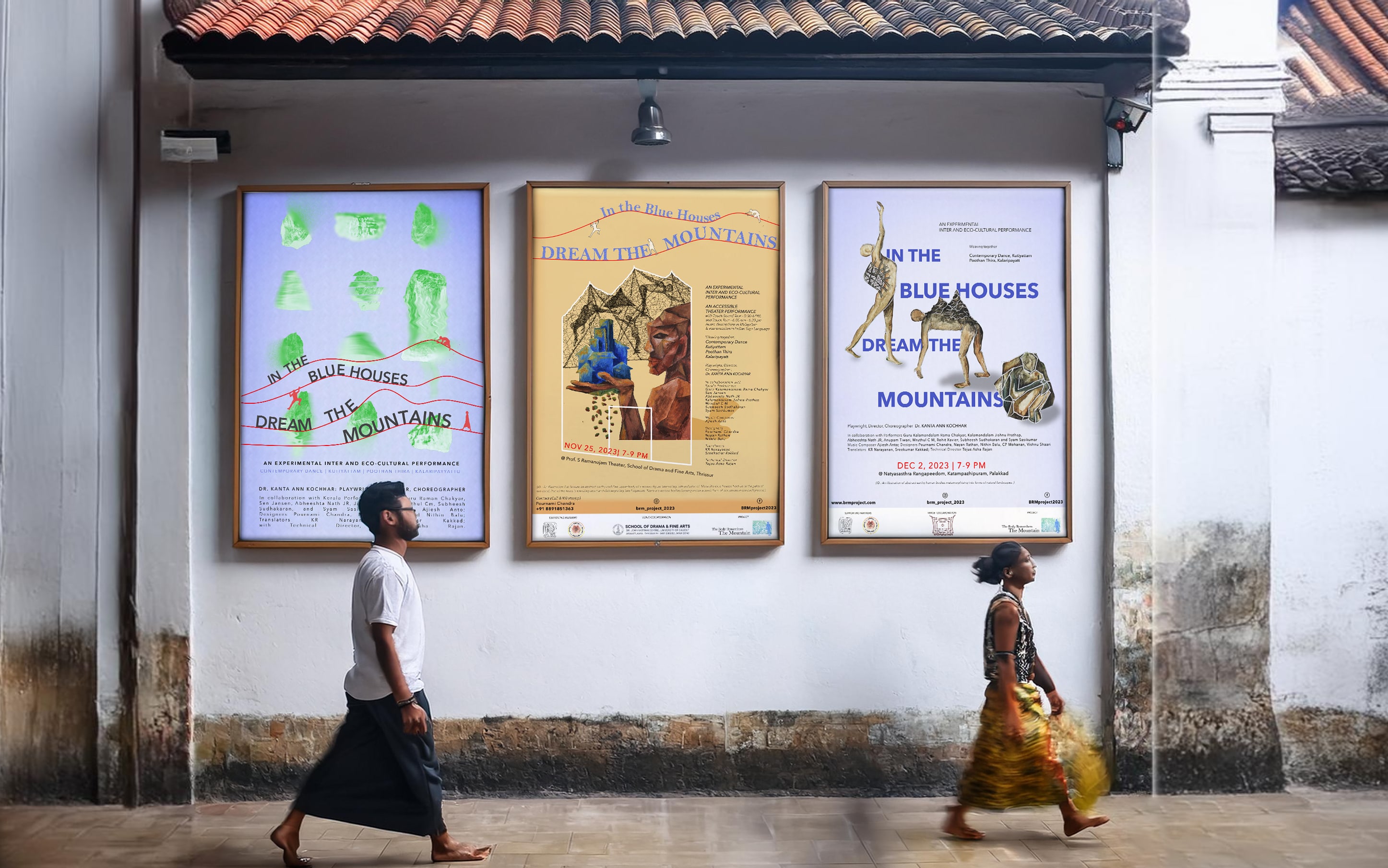
The branding of the BRM project was directed in a academic tone that brought curiosity and engagement, It was crafted in a minimal and earthy design language, in alignment with the project’s theme. Complementary earthy textures and a blue-green palette were selected, alongside the exploration of stone iconography as an intriguing and recurring graphic element. Hand-drawn abstract illustrations were used to support the visual and thematic style, reflecting the project’s ecological focus and connecting it to themes of place, memory, dreams and the environment.
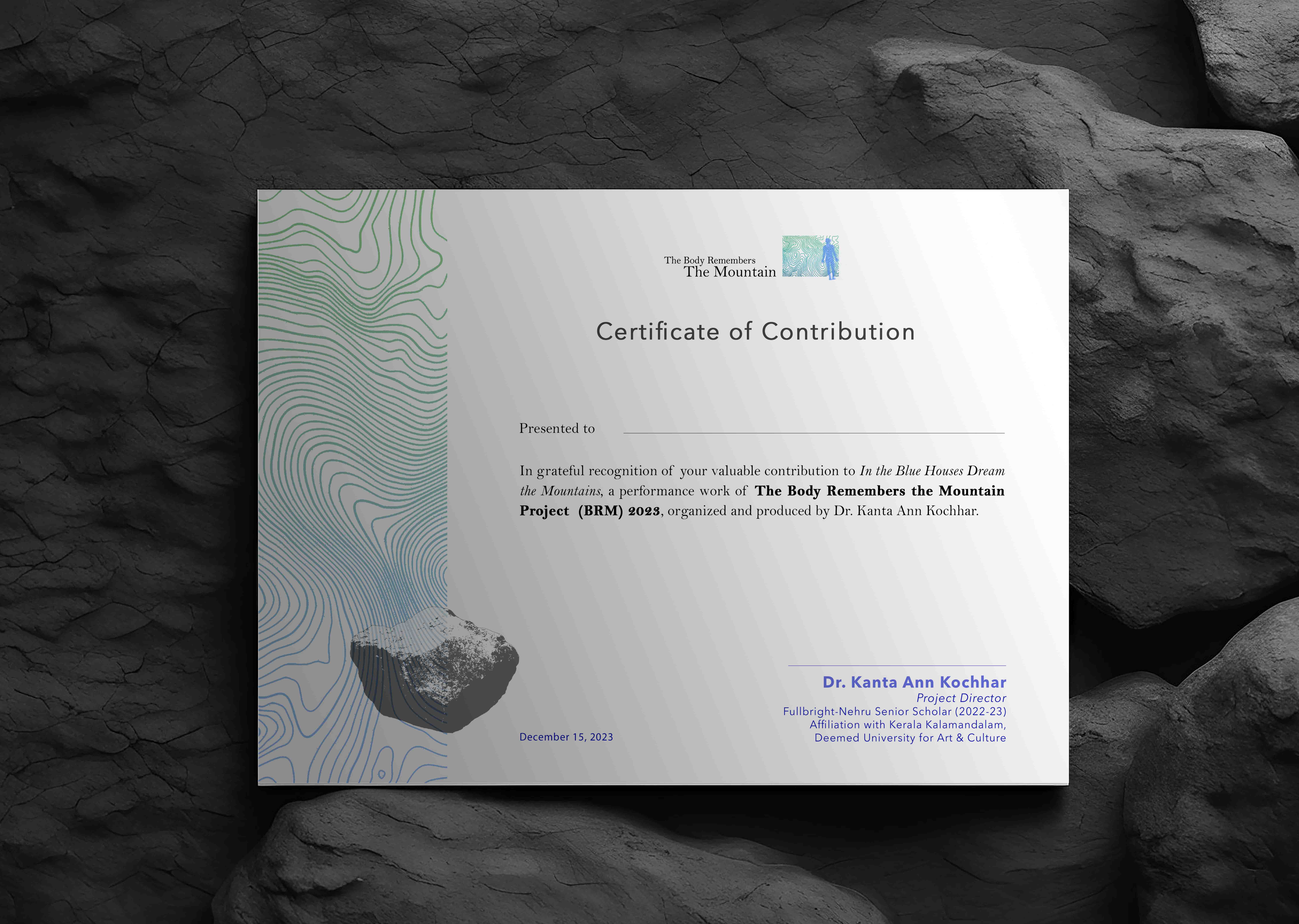
To communicate the project’s vision, I also wrote content for social media, websites, articles and other PR materials in collaboration with Kanta-Kocchar Lindgren, Director and Anand Sachin, Research Assistant. All written content was outlined, conceptualized and edited by the director. The branding and copywriting work collectively helped shape the BRM Project’s public identity.
Collaborated with developers and the project team to design and curate content for the BRM Project website, ensuring alignment with the project’s aesthetic and thematic goals.
Developed a cohesive content strategy to maintain consistent messaging across digital platforms, aligned with the project’s mission and themes.
Created and managed the BRM Project’s Instagram handle, curating posts, stories, and event updates to build an strong online presence.
Designed engaging social media posts, website graphics, banners, and promotional material in print, enhancing audience interaction with the project’s themes.




Research, Design and Performance Project
We ask about what is all around us and can be grasped by the hand, and yet, we alienate ourselves from those immediate things very much. (Martin Heidegger, 1967)
As Brown writes in his essay "Thing Theory":
'We begin to confront the thingness of objects when they stop working for us: when the drill breaks, when the car stalls, when the window gets filthy, when their flow within the circuits of production and distribution, consumption and exhibition, has been arrested, however momentarily. The story of objects asserting themselves as things, then, is the story of a changed relationship to the human subject and thus the story of how the thing really names less an object than a particular subject-object relation. As they circulate through our lives, we look through objects (to see what they disclose about history, society, nature, or culture - above all, what they disclose about us), but we only catch a glimpse of things.'
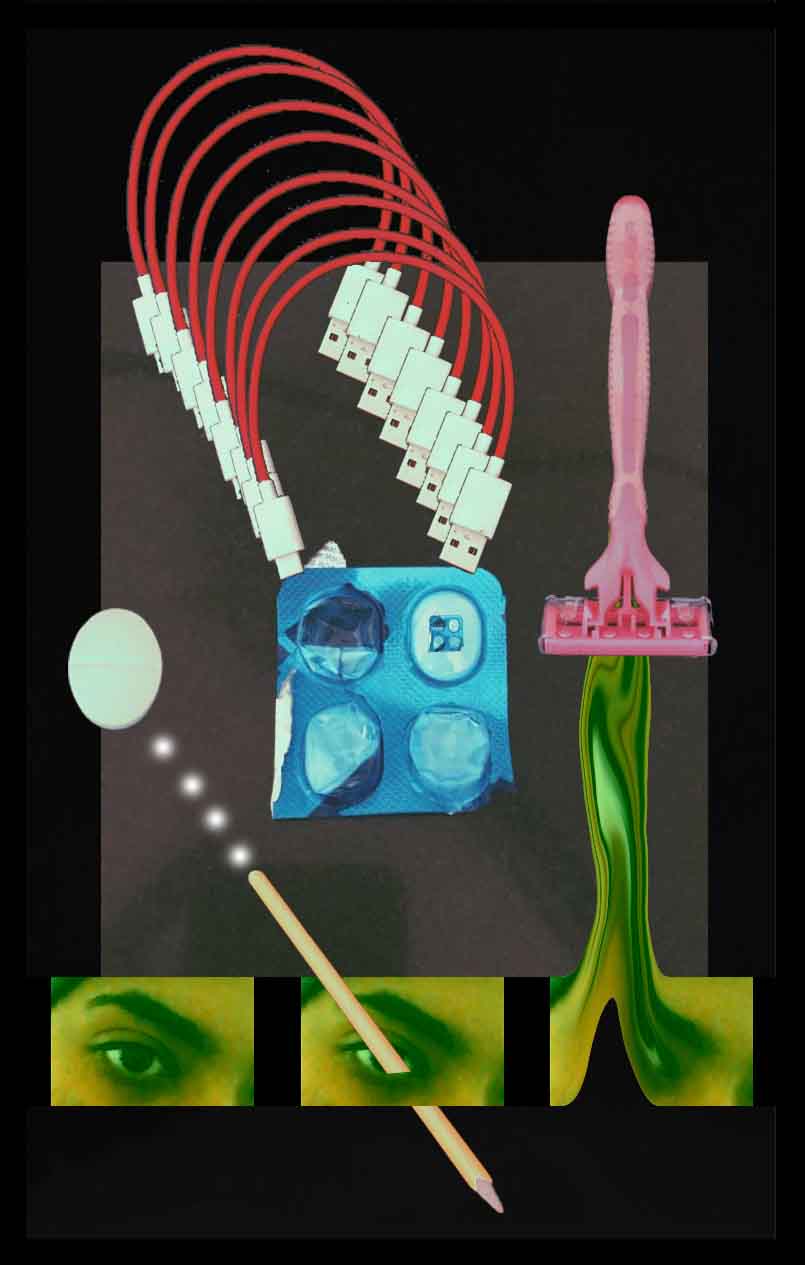
Woke up and I'm unplugged.
Within my room,
Yet stranded up somewhere
Maybe in the ‘in-between’ of space-time-s.
Everything seems to be so paused,
Yet I cannot figure out
If it is the fastness or the stillness,
That makes this feel so terrifically paused.
Its tight and not glitching.
Such power I feel and it's not mine.
The directions of forces here —unknown.
I see no patterns, I hear no stories
Only randomness within randomness.
I tried to move
And heard brittle and clanky sounds.
Noises. Unpleasing noises.
Figured they were coming out of my body.
My skin was crinkling as if it were plastic
Choked and tasted metal in my throat
A strange pain in my head or my feet, or maybe both.
Not like that of a cut, burn, brokenness or a sting
But more like—a pain of a thought
A thought unknown, disfigured.
Stripped off my clothes wondering
If I could get back the feeling of my skin
Or the mud or the air or the green leaves
But my feet landed on cold floors
Floors I could never never break into
Floor I can't dig
Floors that doesn't move a millimeter.
Oh! All those things that surrounds me
A world of things–
A "thing" is that which can be touched, reached, or seen.
I see thingy objects, I see them all,
Some with purpose, waiting to be used
And then a whole lot of things floating without it
Either served and ended its purpose,
Or just in existence without one.
And they all blur in my vision, the closer I look.
All this while I believed it was just one world—
Me tangled with them for an eternity—
Just passing each other silently.
But then I looked closer, lazily and,
Now I have woken up and I found .....
They are 'OTHER' things,
So distinct from my making
Things with a thingness in it
So distant from the nature of my body, yet,
Constructed from very humane imaginations.
And now, I'm not sure if they live in my world
Or, I live in theirs.
In this inspearble existence,
They haunt me for they are so strange.
They blind me for they are flashy.
But they all are —my needy possessions,
Or, I have been possessed by them.
I doubt they can tell what I am or who I am
—beyond my predestined state of being
A participant of the consumer games.
Or have I summoned this world of
Crinkly clanky crumbly
Squishy spongy prickly
Slimy sticky grainy
Things made of things, with other things
To make me something
I never thought I wanted to be.
Whether I hate them, love them,
Need them or want them,
As far as as they served some purpose
As far as their functionalities defined their existence
Their world seemed so NORMAL as much as mine.
But now when I find myself merged—
In a cosmic swirl of things stripped of uses,
I wonder what are they ?
I wonder of their unseen beyond
I wonder if they are still alive,
Having their own universe
And what do they dream like?
In the entropy of too much possession
In the extrinsic transformations
Of the forms and shapes of energy
Now portals have opened—
Mysterious, dark and unknowable.
Are those the portals into their unseen world?
Or is it the ones that will liberate me from them?
Perhaps I am a step away
From not wanting anything anymore
Or though it will I loop back into a world
Just like mine —a bit different Here and There.

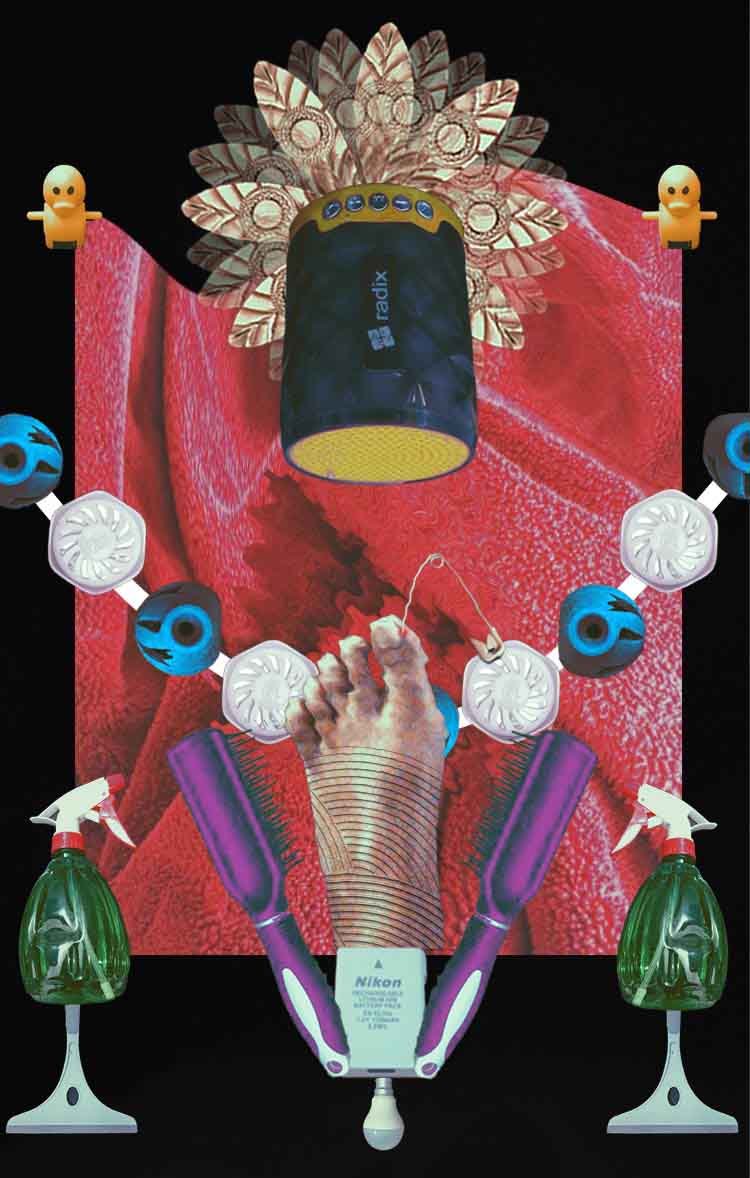
Last night the hair brush told me,
“l will heal you".
Took me to a random world.
I see they were different.
They told me,
“We no different, this our truth”
So I took some of them to my house.
Some kept looking at me.
Some gave me care.
Some I took care of.
This morning I heard,
Some started fighting for their rights.
Forgot to tell them,
“You are different, that's your truth.”
I don't bother the difference, If only,
I would mind the nature of the truth.
And thereby you and I should know,
“Our truths will differ.
But I vow every day,
My house can hold many truths.
Here its not the seek for the ultimate truth,
For I have come to know—
To not to seek but to see
Even those truths
Lurking in the shadows of my own house.”
Headrd, So they stopped fighting.
The safety pin came closer, pricked me soflty,
And to my bleeding feet it asked,
“So then, what is the ultimate falsehood?”
The house started to tremble,
And things kept falling,
In there, I stood on my feet,
And I couldn't help but shyly smile and say,
“Oh, I wouldn't know.
I love my house and,
I love my neighbors.”
And now the house rested with a thud.
Then the hairbrush came close to me
Gently combed my feet, and,
It told me once again,
“l will heal you.”

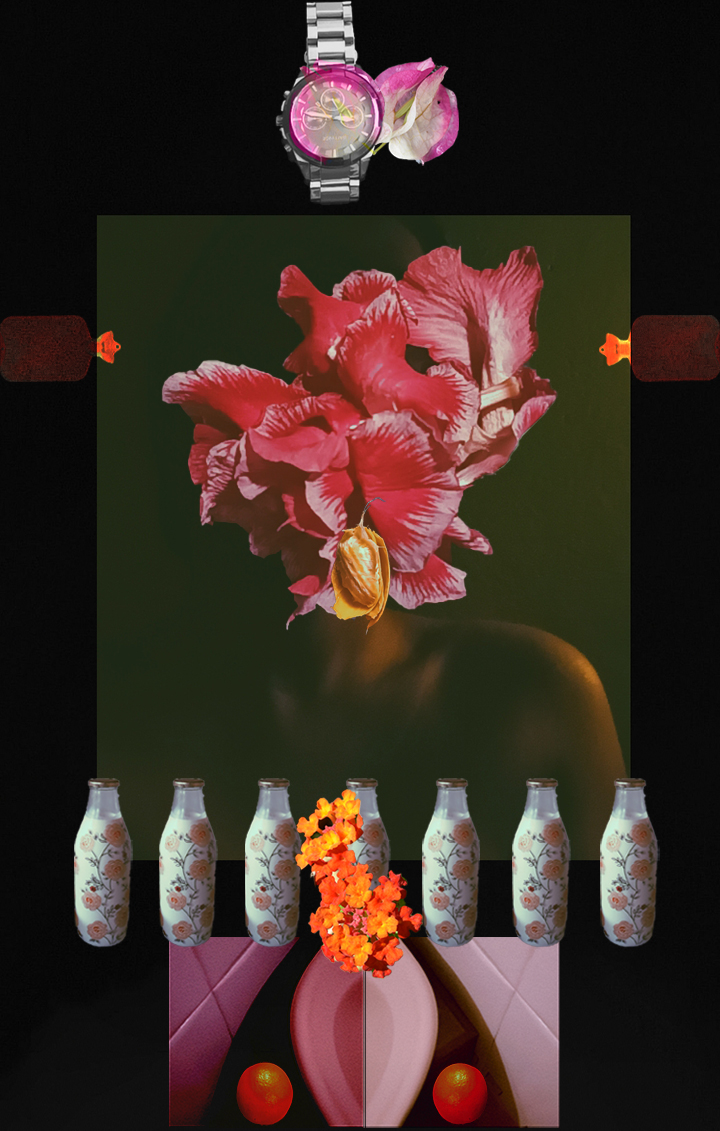
May I exist as a flower today?
And tomorrow perhaps a Mango?
If a flower— I want to be smelled deep,
Until my smell totters your brain.
Use me to adorn your braids
But please don't put me in a vase.
If a mango—
Then caress me until ripe to slither in your hands.
Devour me, when I'm not too sweet—
but with the held on tinglings of sour.
Neverthless, please don't cut me into pieces
And put me in a dish
Peel my skin, eat me with your hands.
I hope you will let the juicy drips stain your cloth.
Yesterday I was only a Indian Milkweed
Tap dancing in the slightest breeze.
Only unintentionally—
Swept you into dreams of coming closer
You should know I can't help my nature—
If you touched me I will disintegrate
Have I not found them yet?—
The hands that I can softly land on
Couldn't wait too long
—went with the wind
Got stuck here and there,
And, lost my body bit by bit.
Oh, I know— The flowers will wilt with time
The bees will collect the nectar
The mangoes will go stale
And, that, will be the beauty of my existence.
Or may be everyday I will be another milkweed
Waiting for my body to disintegrate
The day Im the flower, I wonder what to feel
When my bottles of nectar have dried up?—
A bit more fuller or emptier than ever.
Either way, will I ever hungry for more?
As the clock ticks, I wonder,
Have I not bloomed—for the places were too dark
Did I have to strive, to earn a ray of sunshine?
Didn't I know the soils were infertile?
Did I not let there a luscious forest
With all kinds of flowers— red, blue or black,
With all kinds of fruits —sour, bitter and sweet
And all kinds of eaters —the worms or the bees.
My body will be the forest —Wild and dark,
My soul— today in the jasmine
Tomorrow in a snake
Sleeps in the Nishagandhi
Wakes in the streams
And hides for years in a peepal tree.
But I still wouldn't know,
Will I be full or empty?
Nevertheless,I have decided,
To let it all bloom and feel the air;
I have decided—
I will not prune however it wants to grow.
And I will follow no path so clear—
To see how it wilts.
But I will hurdle, struggle, get hurt, take adventure
And enjoy myself in the forest of desires,
To uncover a path —where I can get myself lost,
Only to see how beautifully it all wilts.


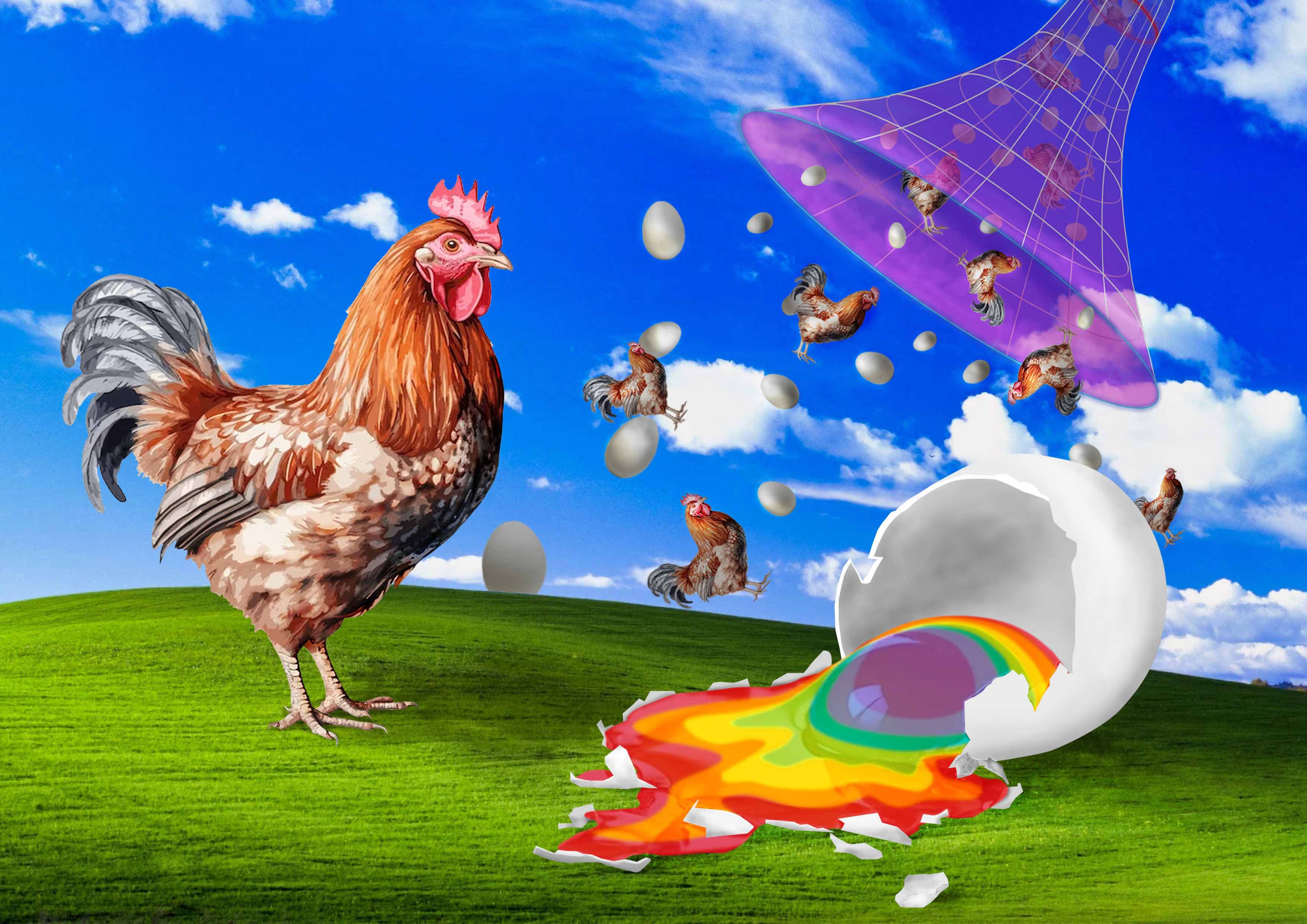
On a festival day in an island, an old man told this story to a group of children. The story is about the greatest incident that have made the soul of this island they live on. It's an old story. Very old. Since it happened some people tried to find reasons for it. Some others nurtured the incident into beautiful stories with their imaginative powers. Very few rejected the whole thing. As times passed no one knew what the true story was.
Here is how the old man remembers it:
On a late afternoon, on the shores of this island, appeared a strange thing. Washed off by the sea. A thing of unprecedented appearance to the islanders. All the people of this small island gathered around it. Doubting whether it could be danger or luck.
Voices came out loud from the crowd_
“A cloth so white and with shining borders can only be the sea's divine gift for the island” said one among this herd of people who have only worn dark coloured clothes till date.
“But what’s wrapped inside? Might be a curse to open” said another.
“Treasure! Treasure! I’m sure.” a yelling came.
“Leave it. The sea will take it.” goes another.
Nobody dared to touch it. As hours passed by, the crowd grew larger and larger. A middle aged woman with a shaved head, who just roams around this village came over closer to this strange thing. She subtly smiled and took that object in her hands and walked with it to her house. The whole crowd went mute as darkness. All the island marched with her to her shabby adobe. A wind of gasps and whispers followed her.
When she reached her house, she placed it softly under a tree in her front yard. She turned back to see astonished, scared faces of men, women, children and everyone many steps far from her. With a grave smile on her face she turned back to the mysterious thing and started unwrapping the cloth.
The crowd faced the woman's back for several minutes of silence. Then as she moved away from it, the islanders saw something even more stranger than the white cloth. A roundish WHITE thing, with unseen beauty. Perhaps white like the clouds. All that the woman did was to sit beside it with a grave smile. People from all over the island came over to see the mysterious thing. The lady stayed mute beside it forever. And nobody asked her anything, She decorated her house for the visitors. She caressed the white thing carefully placed on the white cloth. But she never uttered a word.
Stories started spreading. Some believed it brought good fortunes to the island. Some found hope when they thought about the magnificence of it. After many days the visitors noticed that it started looking different. Getting a little pale. White is fading. It seems degrading like a perishable thing. Started smelling differently. The foulness to the air started disturbing the visitors. The lady sat unbothered, but the island felt fooled.
On one of those days a merchant came over to the island with hundreds of birds in cages. The island had no kinds of birds since then. The merchant told them that these birds will lay eggs and they can eat the bird, the eggs or breed them. They found the creature may be less stranger than the cloth or the white thing. Regardless of its strangeness, it sold off easily. With all the wealth gained, the merchant left happily. Everyone took good care of their strange bird. They woke up to its howl everyday.
And now again islanders have become astonished, because their birds have laid that white round thing. So same as the divine white thing they prayed to. Everyone furiously rushed to the lady. Anguish in the air. Some are angry but most of them were excited. The woman as always unbothered.
From the crowd someone came up to her and asked her to replace the dying one with the new ones their bird gave. And that was the beginning of a never ending ritual. The stale eggs were taken away week and new ones adorned the same place in that white cloth. It's the new ritual, the new culture. The hen and the egg, quite divine. And nearer to it the mute lady - Shined in glory, respect and power.
As the oldman finished the story of this island, A child asked,
“What if the merchant came first?”
The old man shrugged and asked back to the child,
“Today we are celebrating the festival of the egg, right? What if the egg never came to this island? Would you have had your favorite festival?”.
No one knows if the story is real, but soon the celebrations will start.
Research, Design and Performance Project

Revival Iconography (I) is an ongoing series of pattern art developed from elements in the cultural landscape of Kerala. Taking its stylistic inspiration from Indian pattern art and mural designs, this series intends to revive otherwise understated cultural icons. By creating new graphic iconographies along with retelling stories of the local context, it is an attempt to build place- based visual culture.

daakliKaatrya (from southern parts); drohaniira, dridhaphala (fruits firmly attached and yielding water); Karakambha, kaushikaphala (the fruit of Kaushika, a name of Vishvaamitra); Vishvaamitrapriiya, naarikelam, naarikari, kuurchashekhara, kuurchashiraska (with a brush-like tuft of leaves at the head); mahaa phala (great fruit); mrduphala (sweet fruit); maangalya (auspicious); payodhara (bearing milk); phalamunda, shiraphala (fruits borne in a clump at the crest); rasaphala (full of juice); sadapuIpa (always flowering); toyagarbha (with water in its womb); shubhaanga (sacred all over); trinaraaja (king amongst plants); trayambakaphala (bearing fruits with three eyes, like Lord Shiva); uccataru (lofty tree); varaphala (sacred fruits); rasayaanataru (a tree yielding elixir).
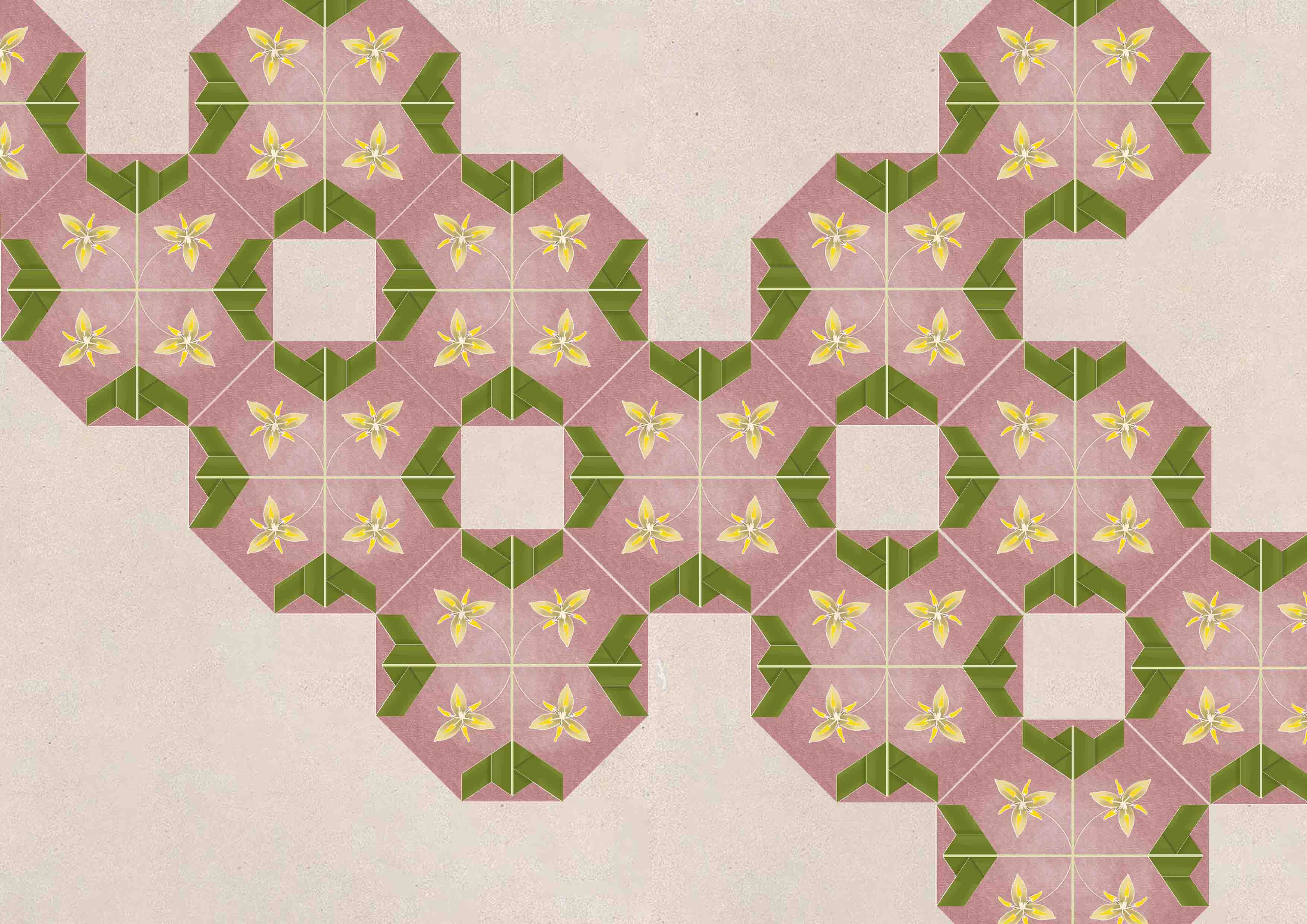




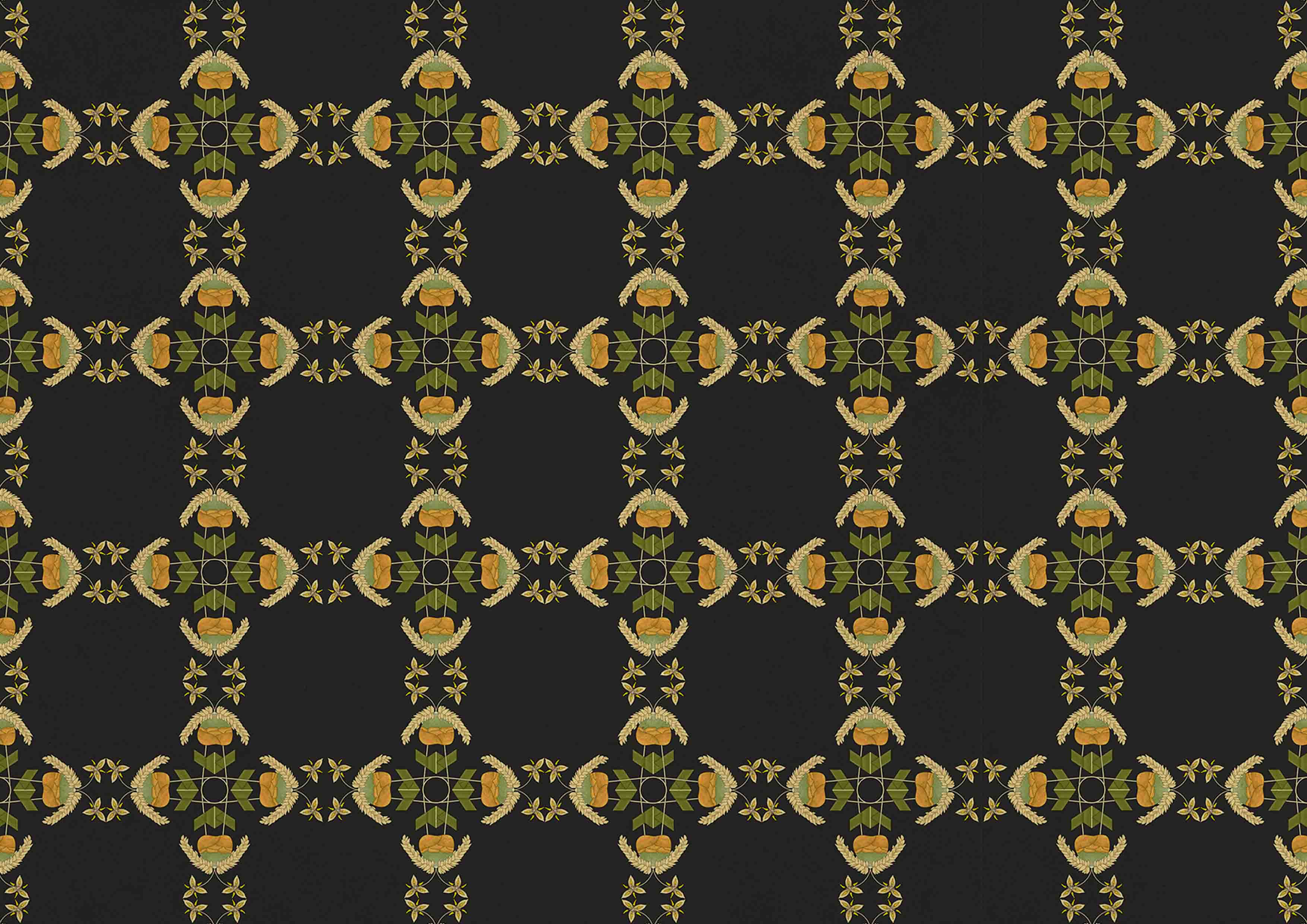
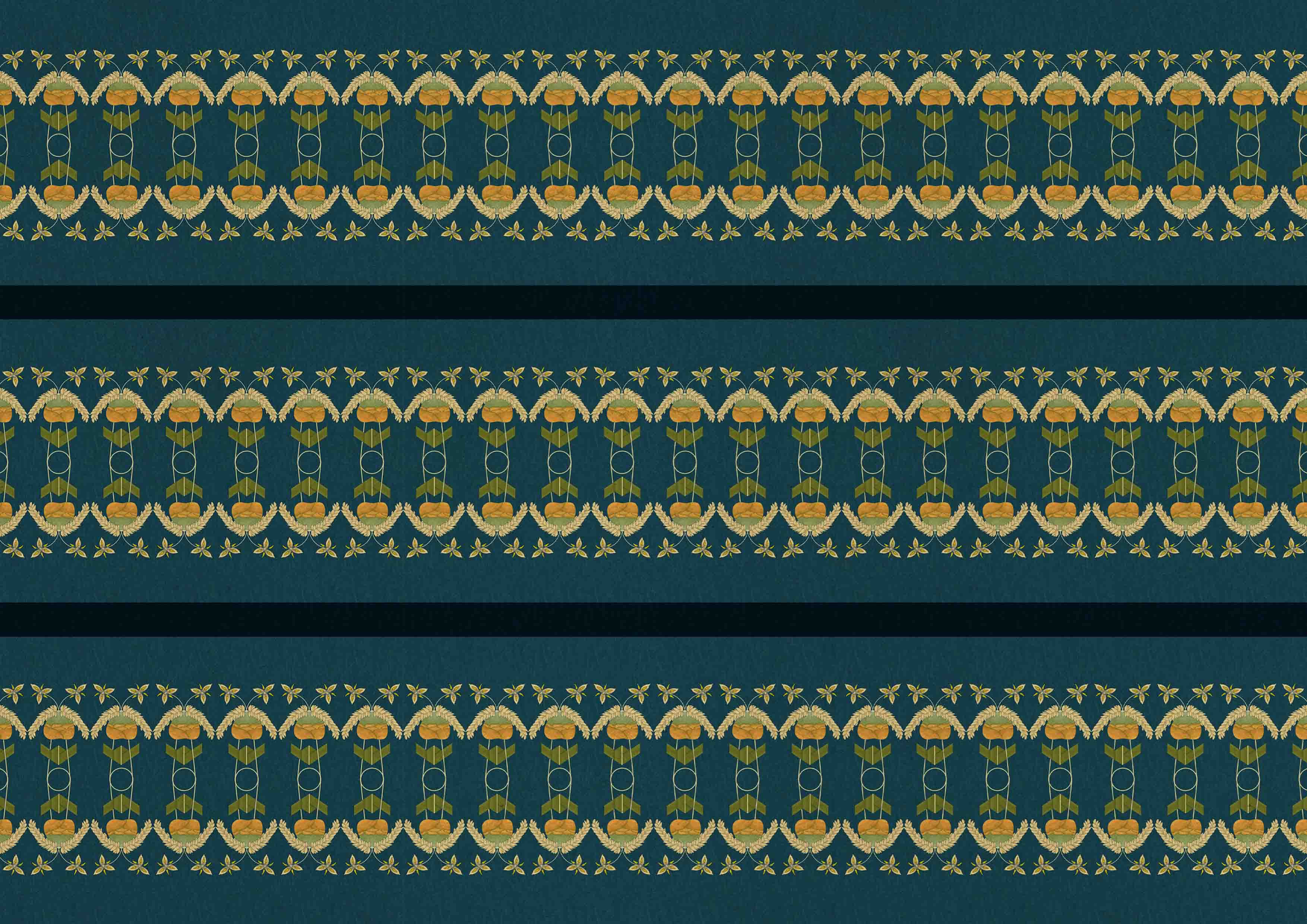
This tropical plant is more than just a plant. From Choolu (broom), ola veedu (Thatched hut), coir, cheratta (coconut shell), velichenna (cocunut oil), thoranam (decorations of coconut leaf) to nalikera paal (cocunut milk), karikk (tender coconut), kallu (toddy), coconut is almost the perfection of productivity.
'In the Puranas, it is said that the sage Vishvaamitra created the coconut tree as part of an ambitious attempt to rival divine creation. From its fruit, he produced a human child, alarming the gods. Lord Vishnu intervened, warning that such creations would bring chaos and imbalance to the world. Persuaded, Vishvaamitra relented, and Vishnu honored the tree by naming it naarikela (coconut) since the sage tried to create humans - nara (the human being), kela means fruit. He proclaimed its fruit as a source of nourishment, wisdom, and healing. This legend emphasises the uncanny resemblance between the coconut and the face of man and the highly useful nature of the fruit as a rich, nourishing food and an invaluable medicine.
The plant is also called a ‘Kalpa Vriksha’, a wish-fulfilling tree as there is literally no part of it that does not find some useful application in food, industrial products, medicine, roofing, etc. The whole economy of many islands and states depends on this tree. There is no religious or auspicious function in India where the fruit and its leaves do not find pride of place. An exchange of coconut fruits is compulsory in most ceremonies. Figures made from coconut, the ‘puurna phala’ (i.e., the complete fruit), are quite commonly seen in important and sacred places. Worshipping at temples, or welcoming distinguished people as honored guests, invariably requires a coconut fruit. The first fruit of the tree is greeted with a ceremony of worshiping the tree and distributing curds and rice. In the south, all pandals (places of gathering), are decorated with a liberal use of its huge leaves. Even the flowers and fruit form inviting doorways. Its tender leaves are woven into fascinating patterns and hung as decorative garlands or toranas. It's just everywhere.’
Sources : Dr. K.H. Krishnamurthy, Botanist. NAMAH, Volume 17,Issue 4,15th January 2010
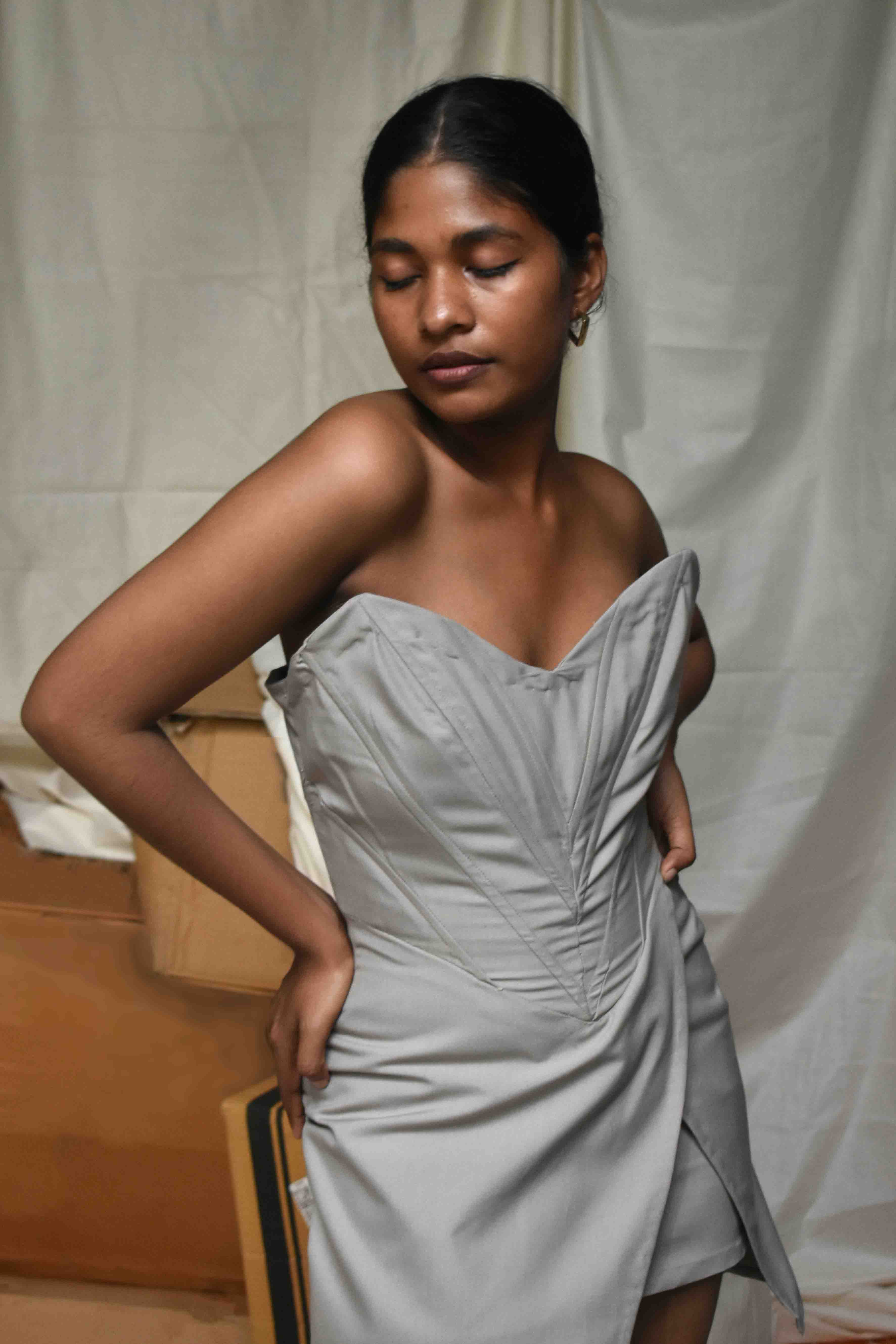
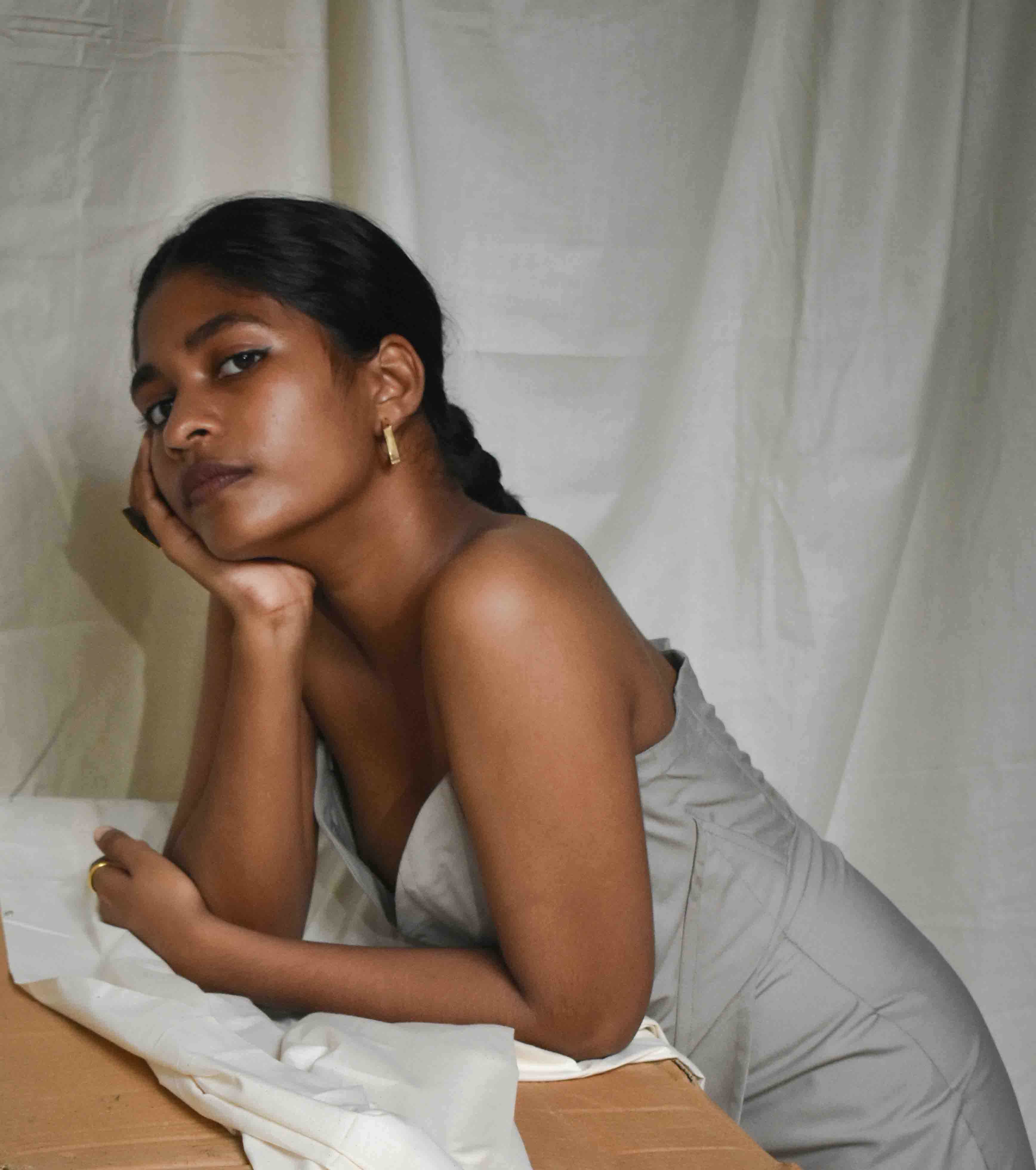
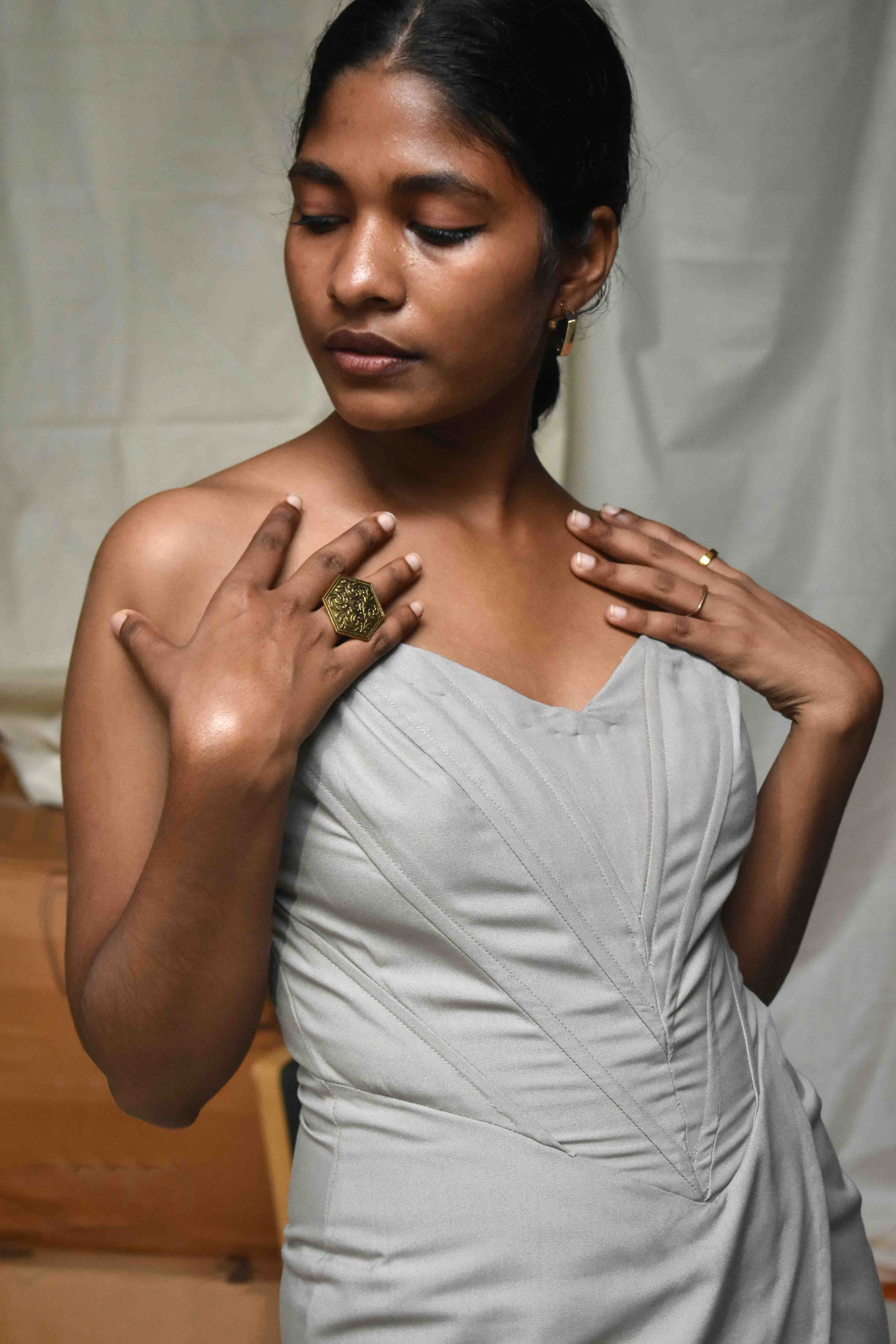
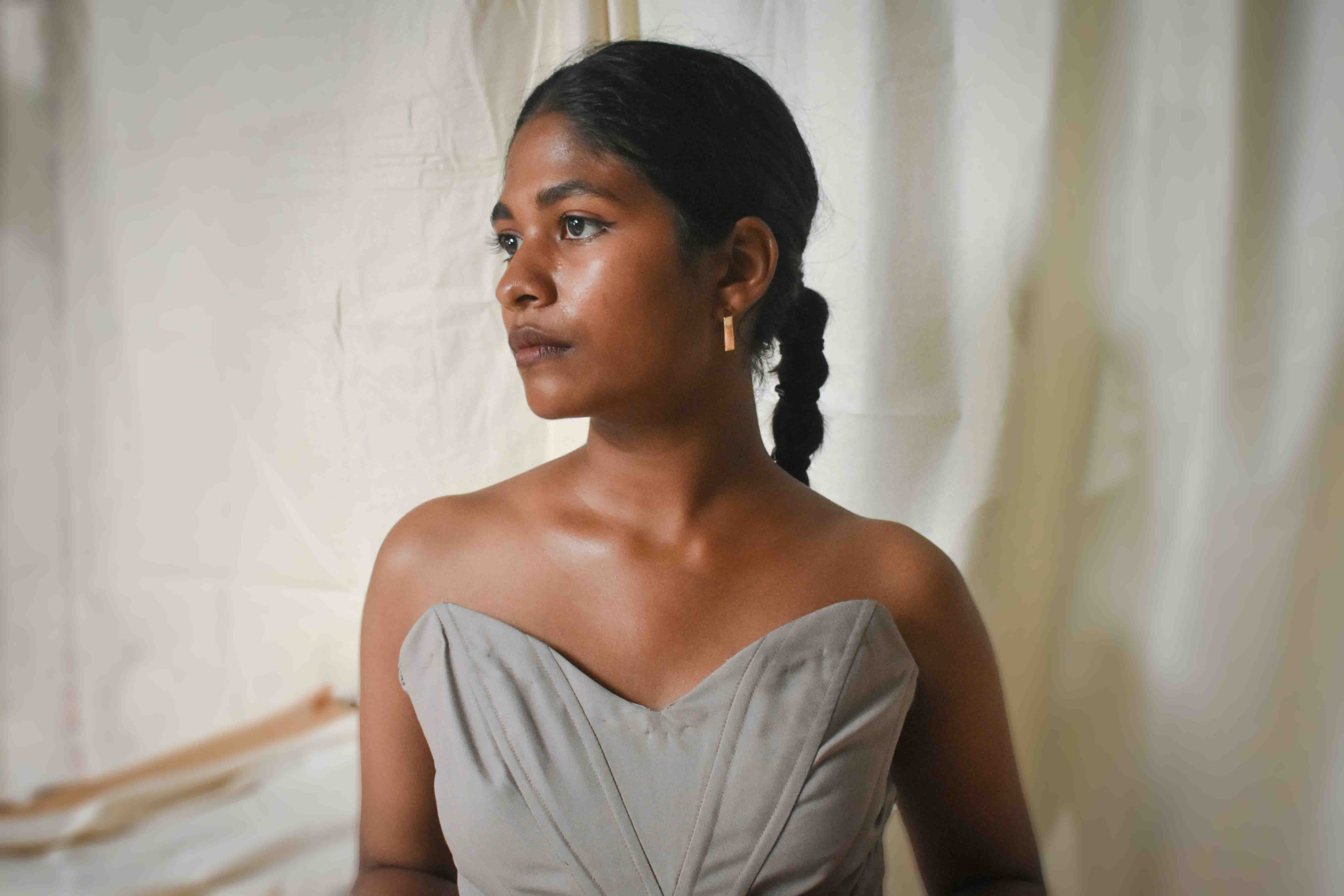
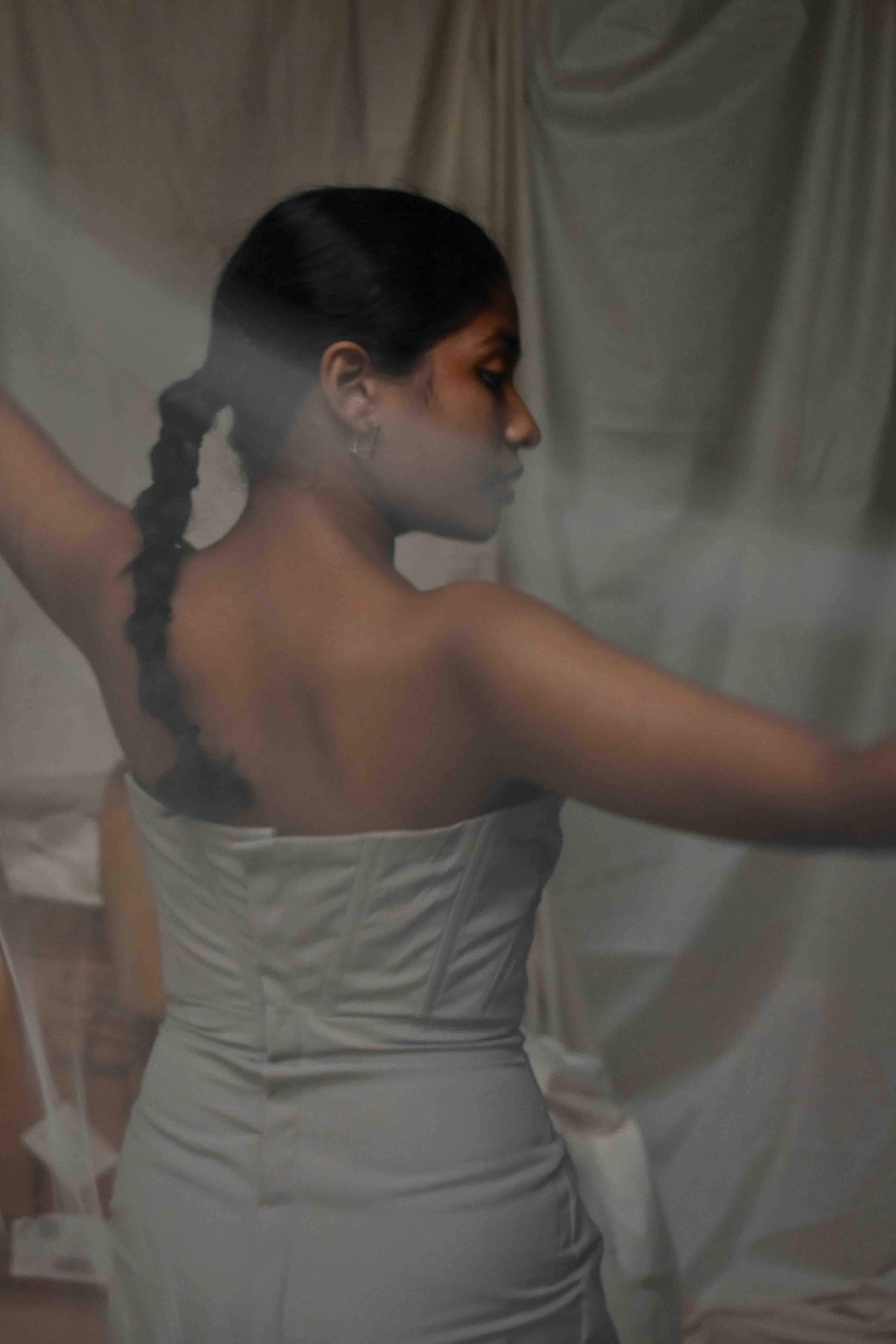

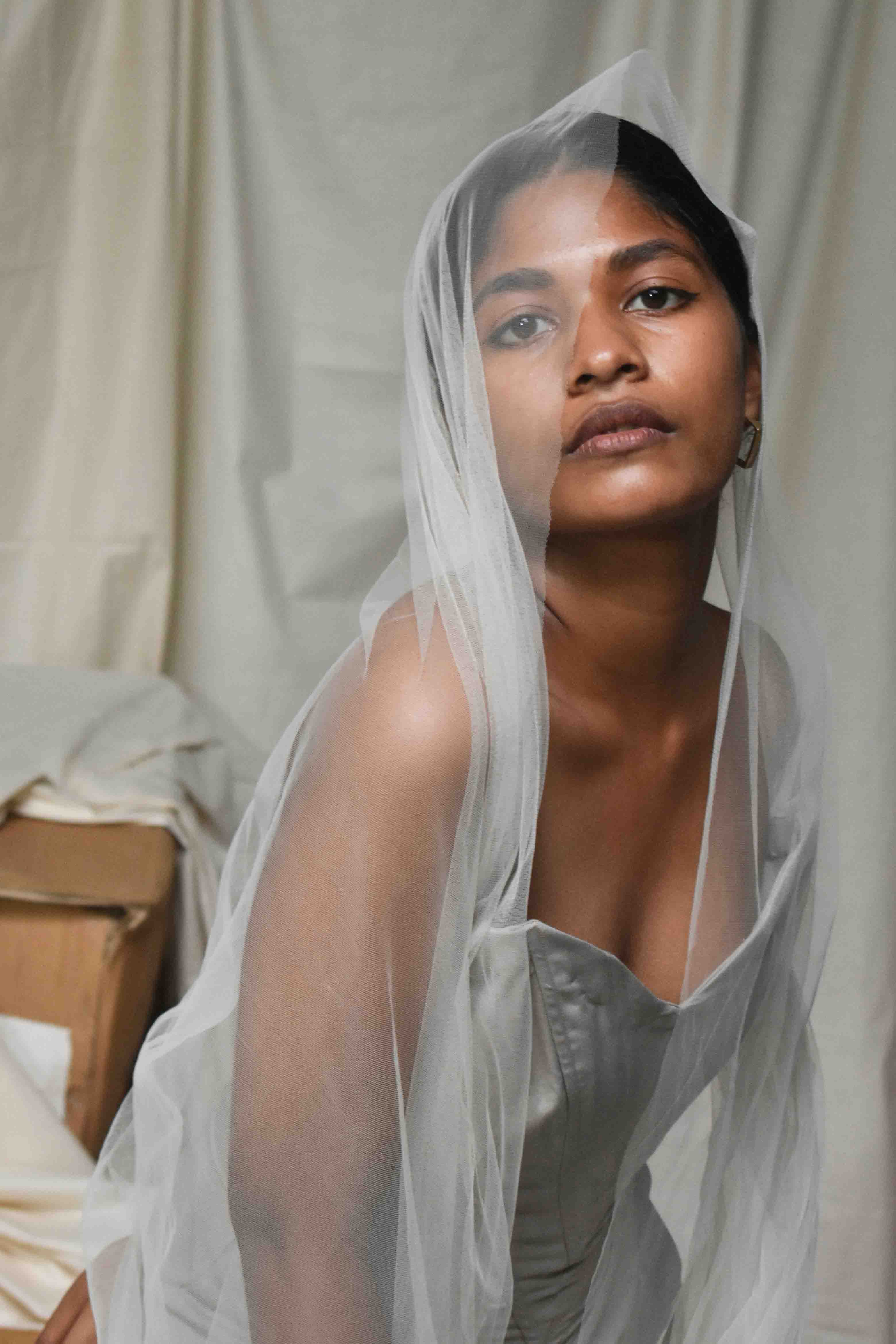
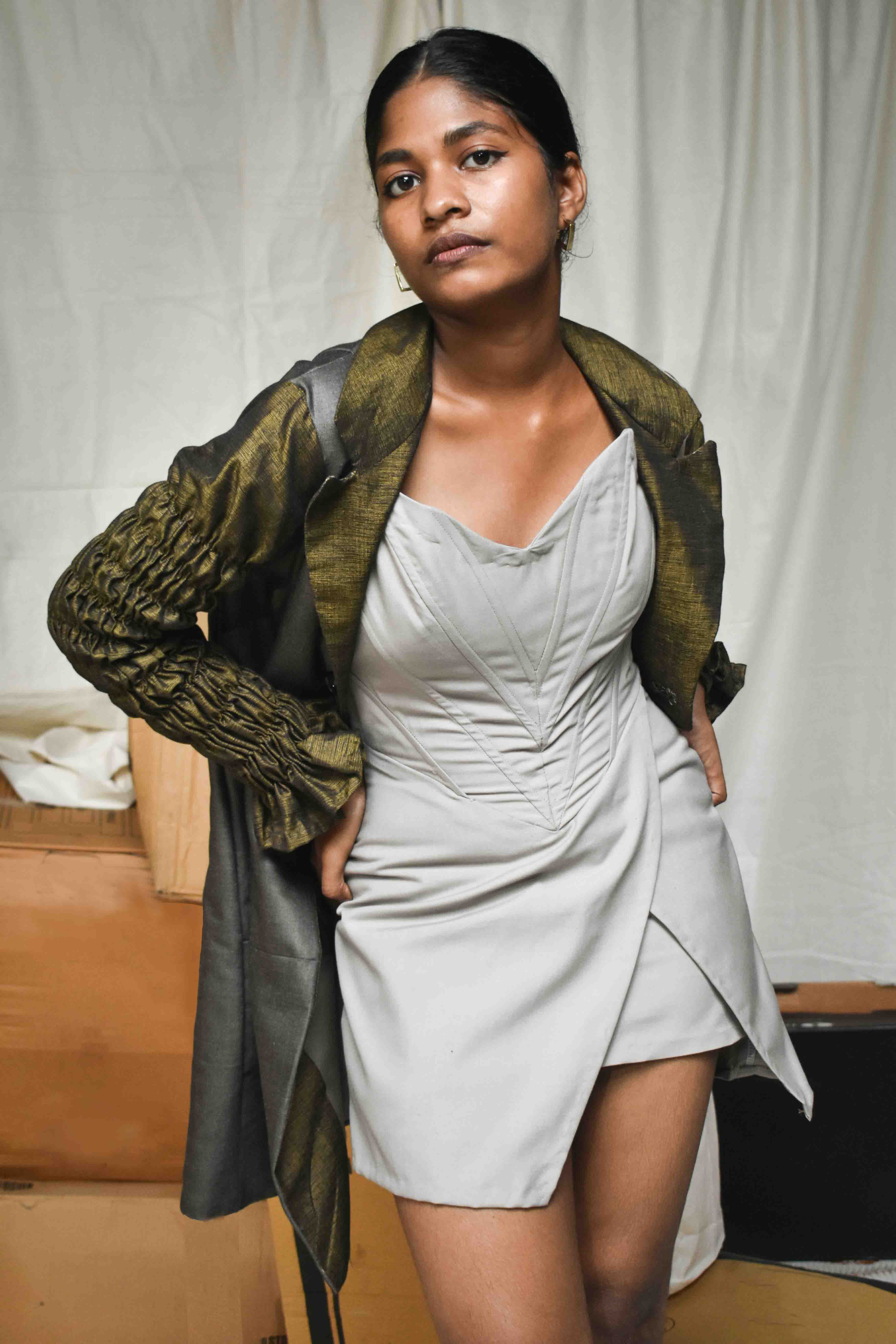
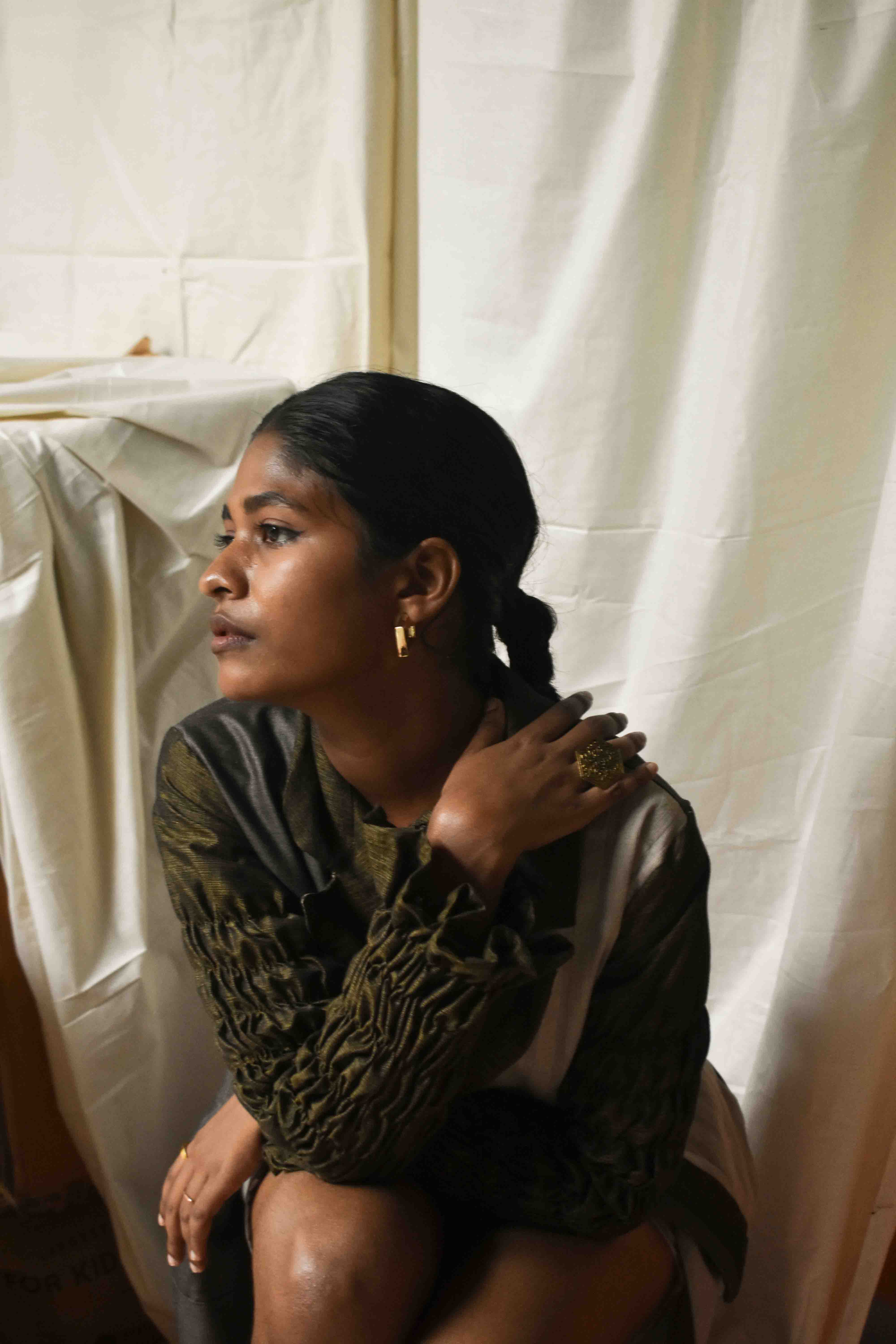

Project Team
Aditya Shine, Jean Paul George, Pournami Chandra, Talal Sunil.
Mentors
Dr. Soumini Raja, Ar. Vineeth T K, Ar. Athira Balakrishnan
Overview
This academic project delves into envisioning a future form of living by introspecting our individual politics, researching future trajectories and questioning our design ethics.
As a group we started from forming a common vision for the future, then designed a community structure and finally modeling it through a virtual game based on the stratergies of the proposed community.

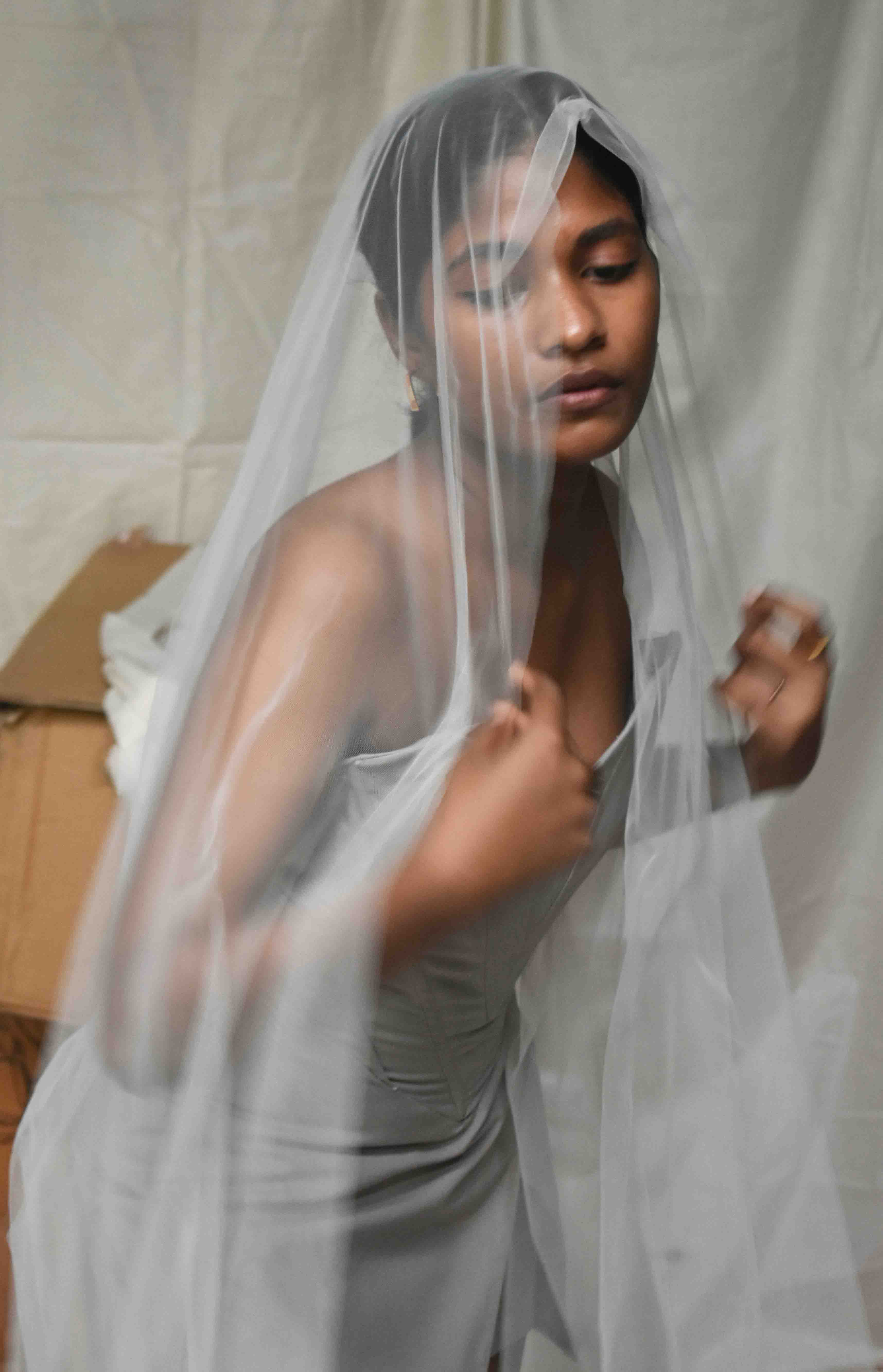
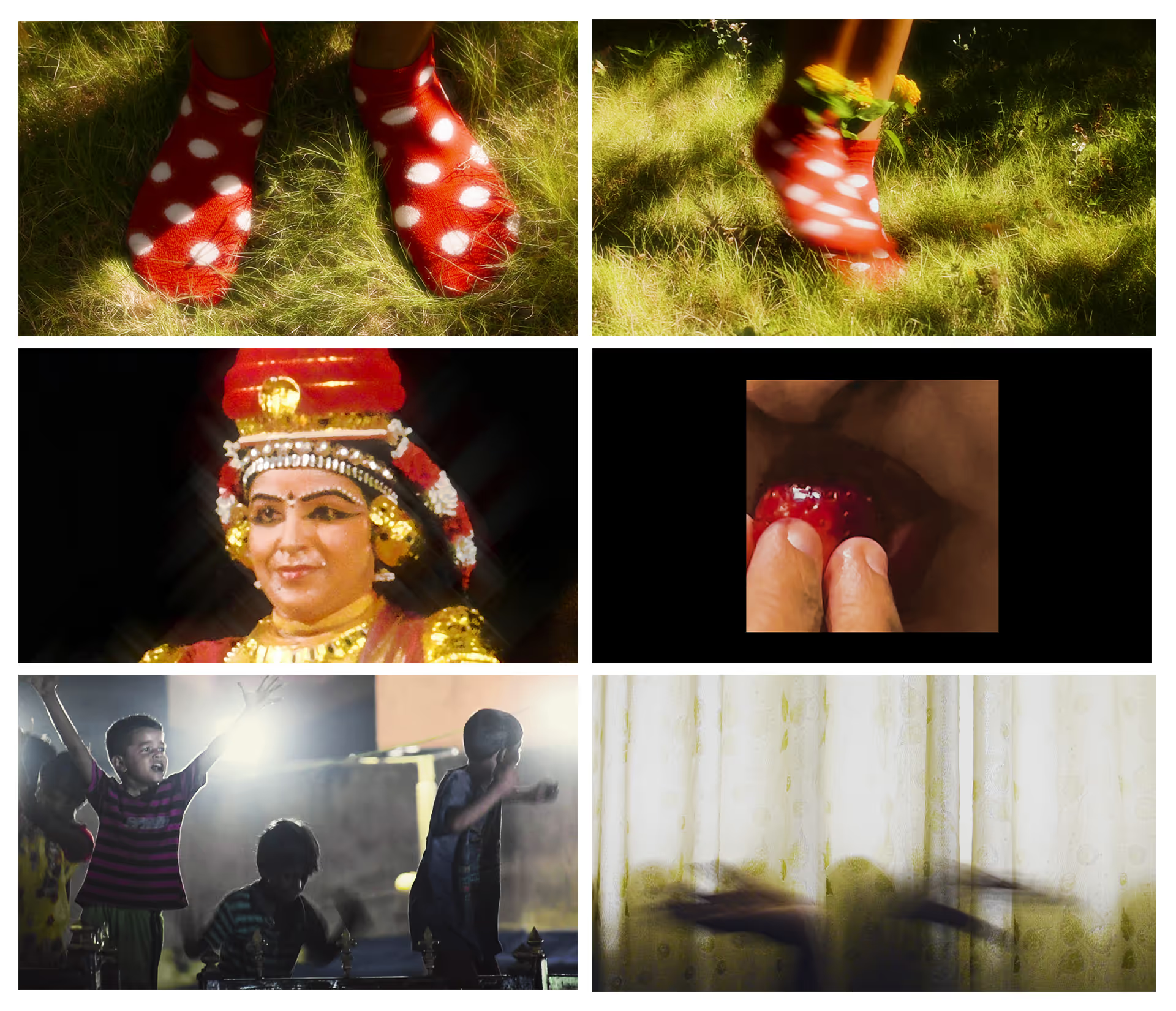
How Does White Even Exist? is an experimental film that examines the nature of reality and the human drive to find meaning. It is explored through the color white —zooming in and out from individual, place, culture, religion, politics, and the cosmos. It is my solo personal project currently under production.

What place does ecstasy have in this world? Greeks have asked it long before. Let us look at the story of Dionysus in the article, Ecstasy: Notes from the Literary and Philosophical Traditions, by Peter Holbrook.
In Euripides’s play, The Bacchae, Pentheus, King of Thebes, refuses to honor a new god who has come into Greece by way of Asia: Dionysus, the deity of wine and intoxication. Dionysus eventually takes revenge for this affront, sending Pentheus mad and having him torn limb from limb by frenzied maenads, the female followers of Dionysus, among whom are numbered Pentheus’s own mother, Agave. At the start of the play, the old prophet Teiresias remonstrates with Pentheus, exhorting him to welcome the strange new god into Thebes, but to no avail. By his own understanding, Pentheus is acting in the cause of reason and civic order: Dionysus is no god, but a fraudulent subverter of self-control. The suggestion of the play, however, is that this proud rationality of the kings is at bottom a form of unreason, an arrogant and blind mental rigidity. Somehow or other, the city must find a way to incorporate the energies and extremities Dionysus stands for. Indeed, to refuse this god of ecstasy is an act of impiety. Ecstasy must be given its due.’
Ecstasy is the recognition of truth, the sort of experience the poet Wordsworth honoured in Tintern Abbey (1798) as
that serene and blessed mood,
In which the affections gently lead us on,—
Until, the breath of this corporeal frame
And even the motion of our human blood
Almost suspended, we are laid asleep
In body, and become a living soul:
While with an eye made quiet by the power
Of harmony, and the deep power of joy,
We see into the life of things.
For Wordsworth, this profound experience, in which one appears almost to have left one’s own body, was not fantastical but a vision of reality; it is in such ‘serene’ moments that one sees ‘into the life of things’.In classical Greek literature, ecstasy refers to removal of the mind or body "from its normal place of function”. There are different types of ecstasies. The emotion of ecstasy has been interpreted in many ways.
Famously there is religious ecstasy celebrated predominantly by Christianity as an act where one is overwhelmed with divinity and becomes in amalgamation with God or the eternal power. For philosophers like Socrates and Plotinus, it is an anti-egoistic feeling, an identification with a good standing far above what the English Romantic poet and radical Shelley called (in his Defence of Poetry,1821) ‘the dull vapours of the little world of self’. Ecstasy can come to you in the most subtle and sober ways as for Socrates who was utterly absorbed by the difficulty of thorny philosophical questions and became rooted to the spot and entirely oblivious to his surroundings all through the night. It wasn’t until dawn of the next day that Socrates came to himself again, made a prayer to the sun and went about his duties.
Ecstasy is the way of love that comes from the transcendence of the self as if their nature were dissolved into the surrounding universe, or as if the surrounding universe were absorbed into their being.‘Leave nothing of mySELF in me’, prayed the English seventeenth-century poet Richard Crashaw.
Ecstasy could be spiritual and might refer to the cosmic oneness as a metaphysical foundation for a political and social universalism, a solidaristic conception of humanity itself.In Lady Chatterley’s Lover (1928), Lawrence has harsh things to say about modern civilization’s ‘insane’ obsession with the individual freedom of the will, expressed above all in the cult of ‘mammon’ and ‘the bitch-goddess, Success’. The ecstasy of authentic sexual love, as between Connie and Mellors in that novel, was one way to abolish such ‘apartness’, and so too were the mystical insights proper to poets and seers. As Lawrence wrote, powerfully: “There are many ways of knowing, there are many sorts of knowledge. But the two great ways of knowing, for man, are knowing in terms of ‘apartness’, which is mental, rational, scientific, and knowing in terms of togetherness, which is religious and poetic.”
But where can you ever find and feel ecstasy?
Maybe it is when you eat a fruit and dissolve yourself into the thinking that how phenomenal is the embodiment of a taste of such a kind in a fruit particularly like this and how wondrous is the normality of the action with which you can experience such tastes through a small tiny part of your body.
Maybe it is when you lose yourself in a dance with the sweet innocence of a child and in its movement, the weight of your body liberates into this air.
Maybe it is like the feeling of one of Krishna’s sakhis who hopelessly fell in love with him and that love perpetuated in everything she saw. The sun, the moon, the rain and even the burning heat felt beautiful drunk in her love.
Maybe it is when a performer gives up their body and mind into the meticulosity and persona of a character played.
Maybe it is when a human for a brief moment in time turns into god in front of others and regardless of what you are or where you come from, you will feel the ecstasy of power.
Maybe it is when you forget the fear of pain and bluntly run yourself into extremities. Or even maybe in pain itself you may find ecstasy.
Maybe it is when you breathe air.
Maybe it is when you become still in the never halting movement of the world you live in.
I believe,
It is both in the extremities and the mundane, we can escape into ecstasy.
It is both being self and being with the other, we can tap into ecstasy.
It is both being fearless and surrendering, we uncover ecstasy.
Objects are the interfaces people use to interact with reality. Objects participate in human behavioural and social realm. Humans with and without material cultures can be considered as two different worlds. Consider the most fundamental human experiences: sleeping imagines a bed, drinking conjures a mug, movement summons buses, cars, and trains. Our existence is fundamentally entangled with objects - 'living' with 'house', 'eating' with 'plates', each action a choreography of human intention and material participation.
As conscious beings we might have interpretations such as - pure human existence is beyond and apart from the object world. But then do the objects also have their own beyond that is quite unseen to the humans?
Objectological Dreaming is an experimental personal art project where the interaction with the object world reflects my thoughts and feelings on the human psyche, universe, and forces of life like religion, sexuality, power, truth, will and consciousness. Through photographic digital collage art, I followed an intuitive process of weaving things together and embracing randomness in order to build stories that housed those thoughts.
Collaborating with Kanta Kochhar-Lindgren on the BRM Project was an invaluable experience, particularly because of her interdisciplinary approach that blends the performance, visual arts, design, and research. Her approach showed how art and design could bring ecological themes to life, making environmental concerns tangible for audiences. I got exposed to working with experimental themes combining different disciplines.
The project allowed me to stretch the learnings from architecture to the framework of scenography in performing arts. Involving in such a practice revealed the importance of understanding and designing spaces in terms of sensoriality and experience over the aspect of functional programming.
Working alongside a diverse group of artists, designers, and performers gave me the opportunity to engage with varied creative processes shaped by their cultural backgrounds. It showed how concepts around space and movement are deeply influenced by context, culture, memories and individual experiences.
Engaging with communities through field trips, collecting stories, and interacting with local artists and historians, made me closer and more exposed to the culture and history that I personally belong to. These communities preserve the arts and that have profound relevance to social and ecological well being.
The study of the performing body in a ‘place’, showed how applications of scenography are shaped by culture, history, and ecological awareness. The wide range of practice and research undertaken in the field “reflects how scenography and scenographic processes take place within, and beyond, theatre and performance contexts, and are varied in form, intention and output, making scenography rich in significance, application and purpose.” (Louise Ann Wilson, 2020). Therefore there exists many definitions which will vary depending on its application whether in architecture, site-specific performance, experience making, theater or film.
Contributing to the field of scenography through exploring drawing as a tool has been a progressive stir to my journey as an artist and designer.
Kanta Kochhar-Lindgren, Ph.D
Researcher/ Writer - ‘The Body Remembers the Mountain’
Choreographer / Director / Curator for In the Blue Houses Dream the Mountains
Guru Kalamandalam Rama Chakyar
Research Collaborator, Kutiyattam Exponent
Performers: Guru Kalamandalam Rama Chakyar, Kalamandalam Jishnu Prathap, Abheeshta Nath JR, Anupam Tiwari, Mruthul Cm, Subheesh Sudhakaran, and Syam Sasikumar; Music Composer Ajiesh Anto; Musicians Anjohn Anto & Thrisha Sajeev; Translator & Dramaturg: K R Narayanan, Translator Sreekumar Kakkad; Indian Sign Language Interpreter : Livin C Lonakutty
Designer, Research and Program Assistant, Pournami Chandra; Designer & Filmmaker, nayan Rathan; Projection Designer, Filmmaker, Nithin Balu; Technical Director & Production Manager: Tejus Asha Rajan; Coordinator for the Accessible Theatres Project, Audio Describer, Research Assistant : Anand Sachin;
* This portfolio presentation focuses on the specific phases of the BRM Project I contributed to, shared in accordance with the non-disclosure agreement. All images, renderings, and illustrations are my original creations (except a few supporting photographs) and are provided courtesy of the BRM Project. They are part of the project’s visual archive and may not be reproduced or distributed without explicit permission.